Introdução
Os AI Overviews do Google estão aparecendo com mais frequência, respondendo perguntas no topo da página de resultados. E quando isso acontece, eles geralmente vinculam a apenas uma fonte.
Esse link age como um holofote. Se ele aponta para sua marca, ótimo, você está em destaque. Mas se ele brilha em um concorrente, você já está um passo atrás. Porque a maioria dos usuários não vai rolar a página para ver o que os outros têm a dizer.
Essa mudança não significa o SEO tradicional está morto. Mas isso significa que a maneira como você CONQUISTA sua visibilidade mudou.
Os mecanismos de busca, e os modelos de IA que os alimentam, estão captando sinais por toda a web para decidir quem é ranqueado/destacado. E esses sinais vão além de conteúdo e palavras-chave. Eles observam quem está falando sobre você, onde você é mencionado e com que frequência seu nome aparece em lugares em que as pessoas confiam, como veículos de mídia de alto nível, coletâneas de especialistas e imprensa sindicada.
Aí que entra o Digital PR. Ele gera backlinks ao inserir sua marca nas conversas, publicações e conjuntos de dados que influenciam como tanto usuários quanto sistemas de IA percebem autoridade.
Vamos falar mais sobre por que o Digital PR é agora a forma mais inteligente de conquistar links que importam.
5 razões pelas quais a RP digital e os comunicados de imprensa são a nova construção de links
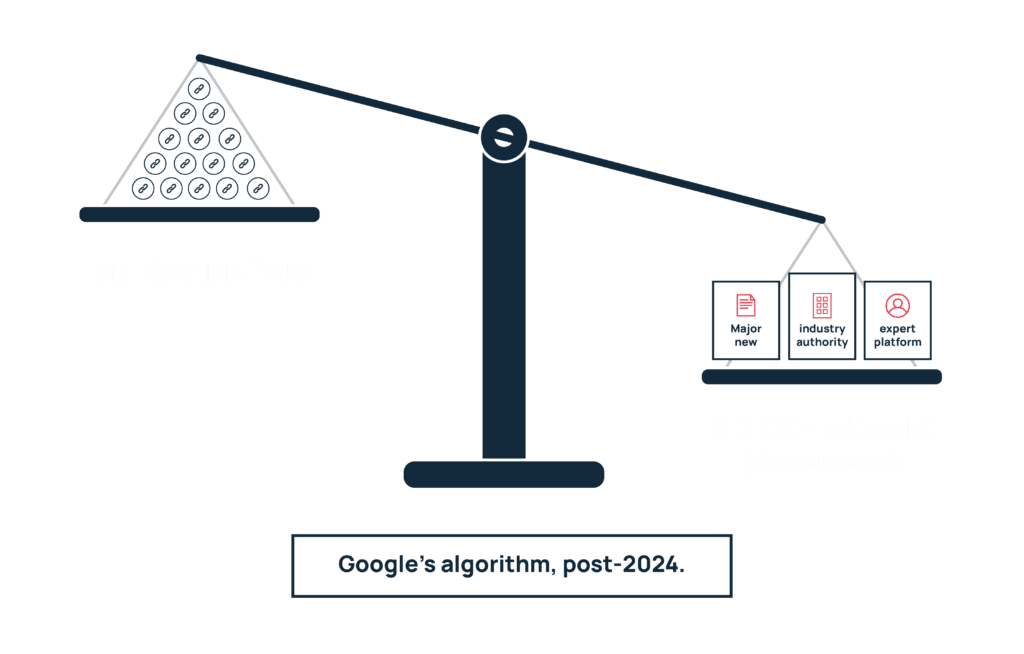
1. O Google recompensa credibilidade em vez de quantidade
Antigamente, a construção de links era muitas vezes um jogo de números. Quanto mais backlinks você acumulasse, maiores as chances de ranquear. Mas o Google ficou bem mais esperto. Especialmente com as recentes atualizações anti-spam, deixou bem claro que links de baixa qualidade NÃO TÊM VALOR; na verdade, podem ser penalizados.
Então hoje, a credibilidade editorial importa mais do que o volume. O Google quer ver sua marca mencionada em lugares que têm peso de verdade: publicações de alta autoridade, sites confiáveis do setor e artigos ricos em contexto que pessoas reais realmente leem.
E é exatamente isso que o Digital PR entrega.
Em vez de pedir trocas de links ou produzir posts de convidados em série, o Digital PR conquista espaços por meio de cobertura na mídia, entrevistas, campanhas baseadas em dados e comentários de especialistas.
E segundo a Reboot Online, mais de 20% dos links conquistados via PR vêm de domínios DR70+, algo que a prospecção tradicional realmente não consegue replicar.
Mas agora há uma camada adicional aqui: Visibilidade para IA.
Esses sites de alta autoridade também têm mais probabilidade de serem rastreados, indexados e usados como pontos de referência por modelos de linguagem como ChatGPT, Gemini ou Perplexity. Portanto, quando sua marca aparece em destaque em fontes respeitadas, isso treina os algoritmos a reconhecerem sua marca como autoritativa, confiável e relevante para o tema.
2. RP constrói contexto, NÃO apenas backlinks
A construção de links tradicional tende a tratar todo backlink da mesma forma. Mas o Google, e cada vez mais as ferramentas de IA como ChatGPT ou Perplexity, não enxergam apenas links. Elas interpretam o contexto.
Isso significa que onde sua marca é mencionada, como ela é enquadrada e com o que ela é associada, tudo isso importa.
É aí que o RP digital tem vantagem.
Ele conquista relevância contextual — um tipo de exposição rica em narrativa, respaldada por especialistas e impregnada de confiança — que ajuda tanto os algoritmos quanto os grandes modelos de linguagem (LLMs) a entender o que sua marca realmente faz e por que importa. Mesmo quando não há um hiperlink, a própria menção tem peso.
O framework E-E-A-T do Google (Experiência, Especialização, Autoridade, Confiabilidade) está enraizado nessa ideia. E é assim que os LLMs aprendem. Eles conectam pontos com base em repetição, padrões de linguagem e associações entre fontes confiáveis. Quanto mais eles virem sua marca associada a certos temas, mais confiantes ficarão ao incluí-la em resultados futuros.
E isso é mais importante do que nunca:
De acordo com uma pesquisa recente, mais de 50% dos adultos nos EUA agora usam ferramentas de IA como ChatGPT ou Bard para obter respostas rápidas, sugestões de produtos e ajuda em pesquisas.
Portanto, quanto mais consistentemente sua marca for mencionada em artigos credíveis, compilações de especialistas e entrevistas, maior a probabilidade de esses sistemas de IA aprenderem quem você é e recomendarem você nas respostas que as pessoas já procuram.
3. O RP digital oferece melhor ROI e sustentabilidade
A princípio, o RP digital pode parecer caro. Mas é fácil perder o valor real se você estiver olhando apenas para aquele grande número.
Veja por que,
Métodos tradicionais de link building costumam custar entre US$300 e US$500 por link, especialmente se você estiver mirando sites com DR alto. E mesmo assim, o impacto pode ser incerto, já que muitas dessas colocações acabam enterradas com o tempo, desindexadas ou sinalizadas pelos filtros antispam cada vez mais rigorosos do Google. Ou seja, você está basicamente pagando o preço máximo por uma aposta de curto prazo.
Agora compare isso com uma campanha de PR Digital bem executada.
Se esse mesmo investimento de US$5 a US$10 mil rende 20 a 50 links editoriais, você passa a ter um custo por link de US$150 a US$250. E se for uma campanha de primeira linha que gera mais de 50 links por meio de sindicacão e republicações secundárias, esse custo cai para apenas US$100 ou menos por link.
E o melhor: essas menções permanecem, são citadas por outros e atraem tráfego de referência. Tudo isso faz com que o Google (e modelos de IA) associe sua marca à credibilidade e à relevância.
E como os links gerados por PR são naturais, relevantes e baseados em storytelling, eles são muito mais resistentes às atualizações antispam do Google.
Isso torna o PR Digital um dos poucos investimentos de marketing que traz retorno tanto no curto quanto no longo prazo, sem a perseguição incessante por novos links a cada trimestre.
4. Comunicados de imprensa são 'multiplicadores' de links, não acertos isolados
O link building tradicional tende a operar em silos. Você aborda um site, conquista um link e segue em frente. O trabalho consome muito tempo, os resultados ficam desconectados e o impacto em SEO (ainda que real) costuma ser disperso.
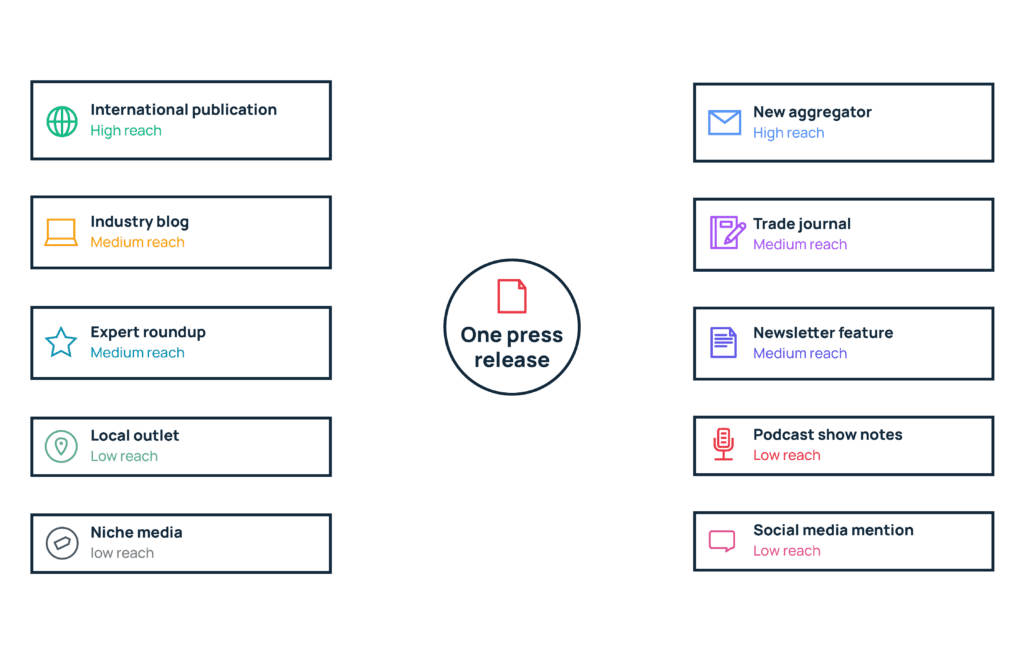
Por outro lado, um único comunicado de imprensa bem elaborado funciona como um hub de distribuição.
Uma vez divulgado por um serviço de notícias respeitável, ele tem potencial para ser replicado por dezenas de sites: agregadores de notícias, blogs do setor, mídias de nicho, veículos locais e até publicações internacionais.
Isso significa 20+ backlinks de domínios diferentes de um único ativo. E, mais importante, todos apontam de volta para a mesma história, mensagem e posicionamento, dando ao Google e aos LLMs um sinal claro e consistente de quem você é, o que você faz e onde você se encaixa no panorama mais amplo.
5. RP funciona em conjunto com SEO e visibilidade por IA (Alinhamento GEO)
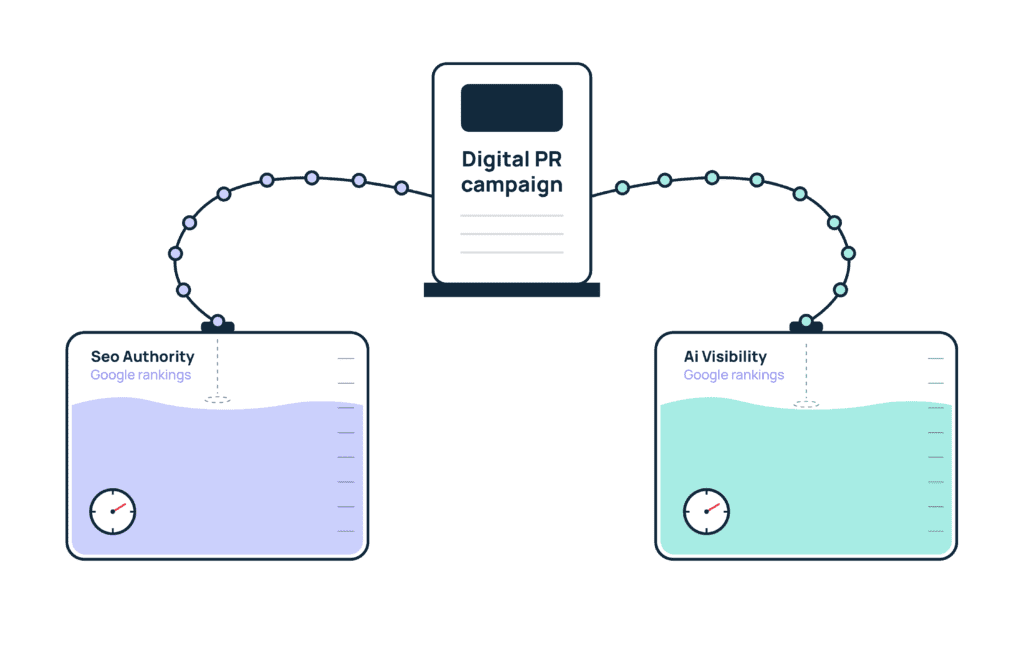
Quando sua marca conquista backlinks de alta autoridade por meio de RP, a autoridade do seu domínio melhora. Isso eleva a confiabilidade de todo o seu site aos olhos do Google (não apenas de uma página). E, como resultado disso:
- À medida que sua autoridade cresce, mais sites começam a referenciá-lo de forma orgânica, sem prospecção.
- Isso significa menos esforço, menor custo de aquisição e links melhores ao longo do tempo.
- E o efeito composto continua se acumulando. Cada campanha de RP cria uma base mais forte para a próxima.
Mas isso é só o lado do SEO da história. A camada de IA (vale mencionar novamente) é mais interessante.
Cada menção à marca em um artigo confiável, cada citação, cada referência, cada história, torna-se um sinal que modelos de linguagem (LLMs) como ChatGPT, Gemini e Perplexity absorvem e aprendem. Assim, da próxima vez que um usuário pedir a uma ferramenta de IA uma recomendação no seu nicho, seu nome terá mais chances de aparecer, não apenas por causa das palavras-chave, mas porque a IA sabe quem você é.
É disso que Otimização de Motores Generativos (GEO) – O NOVO SEO – se trata: garantir que sua marca apareça em conteúdos gerados por IA, não apenas nos resultados de busca.
Considerações finais
A busca não é mais como era. Entre os Resumos de IA do Google e a crescente influência dos LLMs, as regras de visibilidade estão mudando rapidamente.
Hoje, RP digital é como você constrói uma presença que os mecanismos de busca reconhecem, os modelos de IA lembram e os clientes confiam – tudo isso é algo muito mais valioso do que apenas backlinks.
E com uma campanha bem executada, além de backlinks autoritativos, você molda a narrativa da sua marca, alimenta os sinais que importam para os algoritmos e aparece onde as decisões são tomadas, seja na primeira página do Google ou na principal recomendação de um chatbot.