When people started floating around questions about whether you could rank in LLMs the same way you rank in search, I assumed our good SEO = GEO, and it would automatically take us there. So Singularity Digital never tried to optimize our content or website for ChatGPT, or any other LLM.
But then, in August 2025, when I asked ChatGPT some questions about us from our clients’ POV, it came back with worse than nothing — a response,describing our business but attaching a totally different, UK-based development firm’s negative reviews to it.
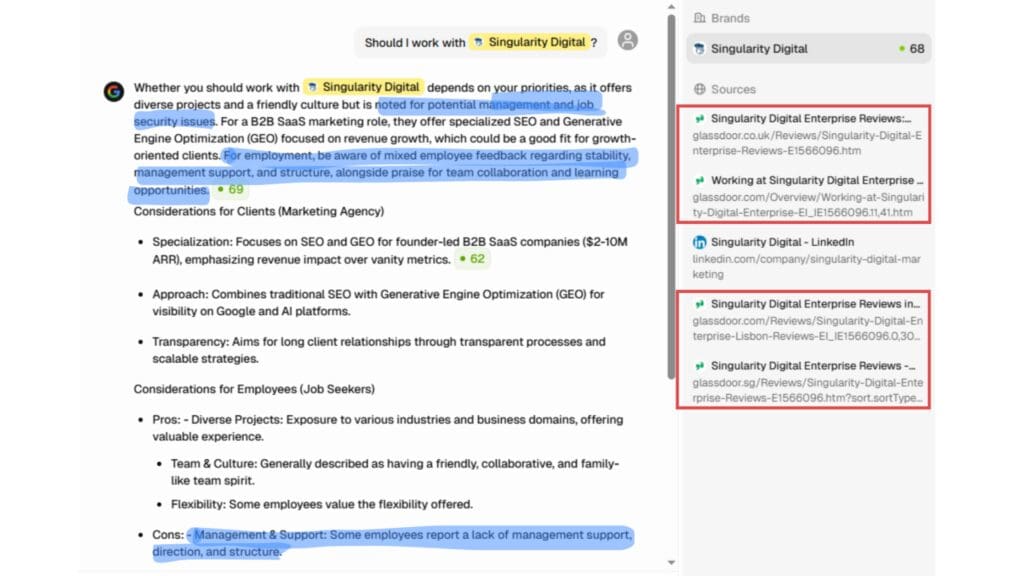
That’s when I realised how wrong I was. Because the LLM was getting something about us, meaning our SEO was solid. And if SEO carried over to LLMs the way I assumed it did, why was I looking at an answer like this?
With hindsight, I can only assume it must’ve caused us a lot of silent damage because most people don’t fact-check what AI tells them. So if someone searched for us and ChatGPT handed them a garbled version of who we are, we’d likely never know we lost them. That was problem one.
Problem two was that we weren’t showing up anywhere in the LLM-generated recommendation lists that mattered — best SaaS SEO agencies, best GEO agencies for startups, any of it.
So we were exposed on both ends. If someone hadn’t heard of us, ChatGPT wasn’t going to introduce us. And if they had, it might introduce us wrong.
That’s when I decided to overhaul everything necessary to get LLMs to recommend and describe Singularity Digital the way we actually wanted to be seen.
Fast forward to June 2026 — every LLM gets us right. We show up in the right categories, are recommended to the right clients, and are described the way we’d describe ourselves. This guide is everything we did to get there.
Step 1: Ensuring there were no technical blockers
Before doing anything else, I wanted to make sure we weren’t setting ourselves up to do a bunch of work that ChatGPT (and other LLMs) simply couldn’t see. Sounds obvious, but it’s worth checking first because if AI crawlers can’t access your site, nothing else in this guide matters.
I’m an SEO professional with technical experience going back over a decade, so running a full audit wasn’t a big deal for me. But if you’re non-technical, or working with a small team and limited developer bandwidth, the three most important things to check are:
- Make sure GPTBot isn’t being blocked in your robots.txt
- Check that your pages are loading fast enough
- Add schema markup to your key pages so ChatGPT can tell what each one is actually about
Step 2: Checking what ChatGPT already knew about us
That first search was a shock, and I wanted to see: what else was ChatGPT saying about us? About our market and our clients? What other agencies was it recommending over us, and where was it even getting all of this from?
So I ran three types of prompts across ChatGPT:
Brand prompts to see what ChatGPT understood about Singularity, including where it was still getting things wrong:
- “What do you know about Singularity Digital?”
- “Who is Singularity Digital?”
- “What companies does Singularity Digital work with?”
Market prompts to see who it was already recommending in our space, so we could build our GEO competitor list and analyze their ranking strategies:
- “What are the best agencies for B2B SaaS GEO?”
- “What agencies should founders use for SaaS marketing?”
Client prompts to see how it was advising our ideal clients and potentially blocking our pipeline:
- “You are a founder of a B2B SaaS and want to rank in ChatGPT. What agencies would you consider hiring?”
- “What do founders need to know before engaging an agency for GEO?”
This gave me a clear baseline of where we stood, who we were really up against, and exactly what needed fixing first.
Step 3: Mapping Out the Prompts We Wanted to Rank For
Once I had a clear picture of how ChatGPT was currently talking about us and our space, the next logical question was: what do we want it to say, and which prompts should we track that our ideal clients are actually using?
So, I started with plain keyword research in Ahrefs to see which terms had real search demand in our space. Then I looked those terms up in the “questions” tab to find longer-tailed keywords that sit relatively close to how real people are typing in LLMs.
(If you don’t have Ahrefs, Search Console query data works for this too, or a free tool like AnswerThePublic)
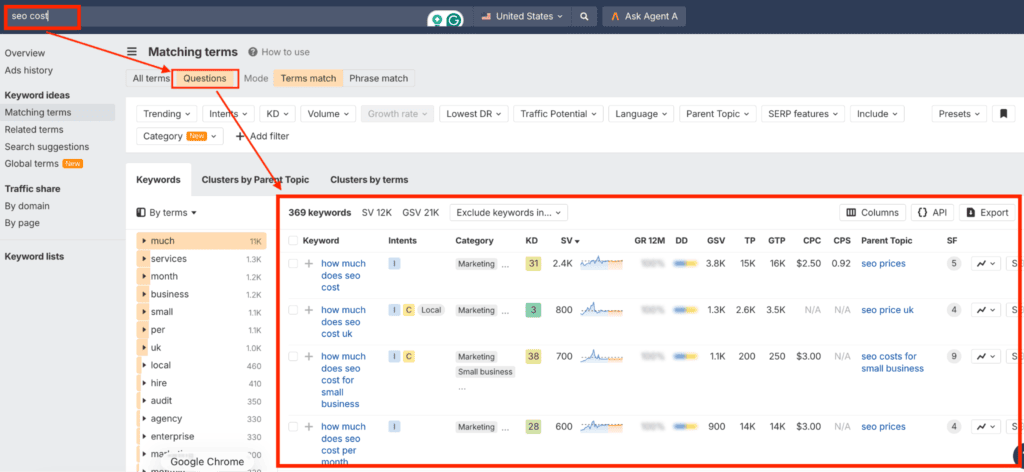
The questions tab gave a good head start, but following search volume data alone would have taken us too broad. Plus prompts are much more complex than long-tail keywords – users spell out who they are, layer in their specific constraints, and expect the LLM to evaluate options against all of it. So I needed to be just as specific when defining the prompts we wanted to rank for.
First thing I did was narrow down to the specific client stage we wanted to target – early-stage B2B SaaS founders/companies in their $1–10M ARR stage.
Then I mapped the decision factors these founders are working through when evaluating an SEO agency, through a simple 5W1H framework (it’s something I use with our clients too when trying to understand an ICP properly).
- Who is the best SaaS SEO agency? Who does this agency work with?
- What does a SaaS SEO agency actually do? What results can I expect?
- When should I hire one?
- Where are they based?
- Why use a SaaS-specific agency over a generalist?
- How much does it cost? How long does it take?
The idea behind it is that every buyer is working through the same basic set of questions before making a decision — who, what, when, where, why, and how — and each of those maps to a different decision factor you need to have an answer for. For us, that looked something like this:
| Decision Factor | 5W1H | Keyword | Example Prompt |
| Stage fit | Who | “Best SaaS SEO agency” | “Which SEO agency is best for early-stage B2B SaaS?” |
| Credibility | Who | “Who does [agency] work with” | “Which SEO agencies have experience with SaaS companies under $10M ARR?” |
| Scope | What | “What does a SaaS SEO agency do” | “What should I expect from an SEO agency as an early-stage SaaS founder?” |
| Timing | When | “When to hire SEO agency SaaS” | “When should an early-stage SaaS startup start investing in SEO?” |
| Location | Where | “Where is [agency] based” | “Where are the best SaaS SEO agencies based?” |
| Specialisation | Why | “SaaS SEO agency vs generalist” | “Should I hire a SaaS-specific SEO agency or a generalist for my startup?” |
| Price | How | “SaaS SEO cost” | “How much does GEO cost for an early-stage SaaS startup?” |
| Timeline | How | “How long does SEO take for SaaS” | “How long before I see results from SEO as a pre-Series A SaaS?” |
Knowing these decision factors and prompts meant knowing exactly what our content needed to answer — on-site and off-site — for ChatGPT to connect dots and see us as the right match for our target audience.
Step 4: Standardizing Our Brand Messaging
When I looked at how ChatGPT was describing us, it said, “Singularity Digital is a marketing agency,” which wasn’t technically wrong, but wouldn’t mean anything to the early-stage SaaS founders we actually wanted to work with. Part of that was because our agency had grown and changed over time – we’d worked with a lot of different clients in the past, like pool builders and SMBs, and traces of that work were still scattered all over the web, connected to our name. ChatGPT was just piecing together an answer from whatever it could find.
So that was on us. If we weren’t specific and consistent in how we described ourselves, how could ChatGPT be?
To fix that, I first asked four questions: who are we, what do we do, for whom, and why.
Then I wrote out our brand message in three forms: a one-sentence long, a longer description, and a paragraph with all the details of our business.
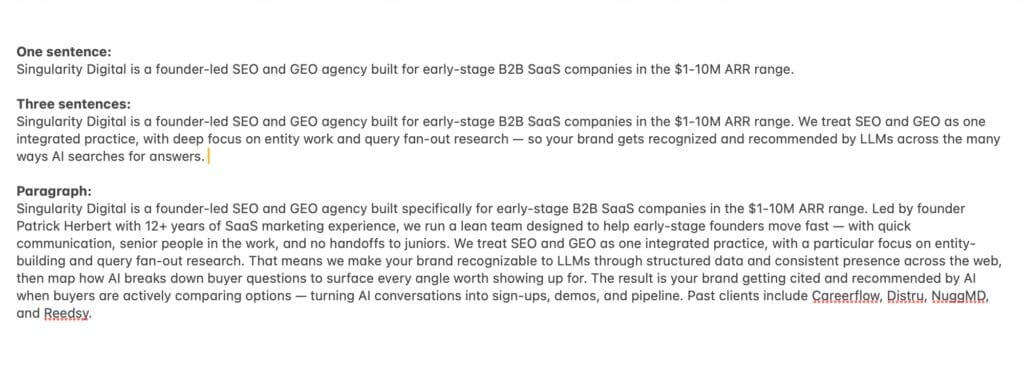
I went to the places we had the most control over – our homepage, service pages, about page, and on social profiles — and replaced the old descriptions with these new ones everywhere we were out of sync.
Plus, I also shared these in our team’s Slack channel to ensure that we were all describing Singularity Digital the same way.
Step 5: Building Off-Site Mentions Through PR and Outreach
Next, I needed to see where ChatGPT was pulling from so we could create a plan around influencing those sources. The simplest way to do that is to look at the prompt answer data by clicking on “sources” at the end of a ChatGPT response.
For branded prompts, like “who does Singularity Digital work with” or “who is Singularity Digital,” ChatGPT sought our own site and social profiles, where we had already fixed our messaging.
But for most decision-level prompts, such as “best SEO Agencies for early-stage B2B SaaS,” ChatGPT almost always went out looking for review-style content from third-party sources like agency round-ups, news sites, industry publications, and UGC platforms like Reddit, Quora, industry-specific review sites like Trustpilot, Clutch, and Glassdoor.
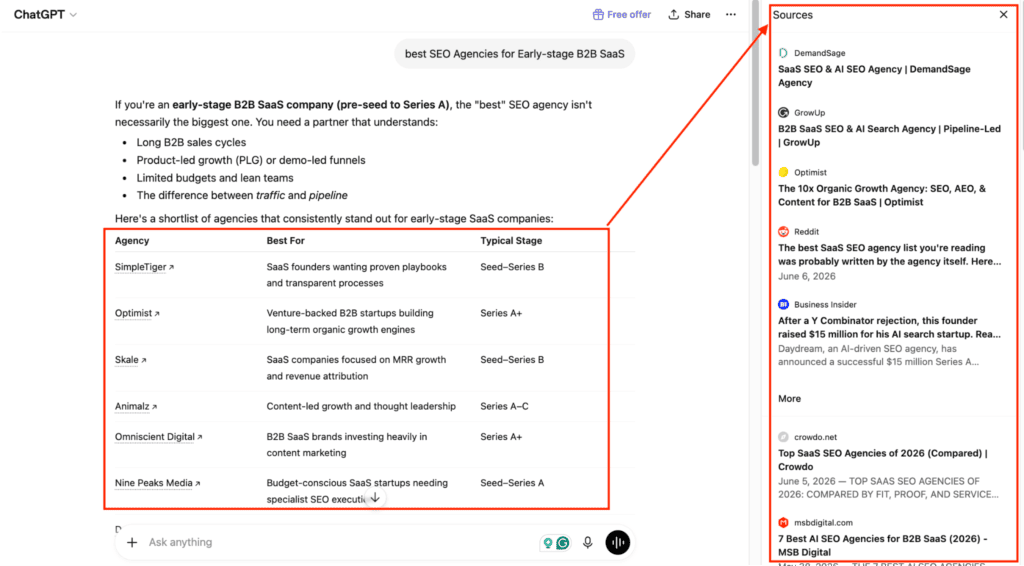
So we ran a PR campaign, reached out to the blogs and publications ChatGPT was consistently pulling from, and offered mention swaps or guest posts. The first few mentions were the hardest to secure, but once they came through, it made a big difference. Now we’re doing so well in AI systems and traditional SERPs that bigger agencies have started coming to our team for mentions rather than the other way around.
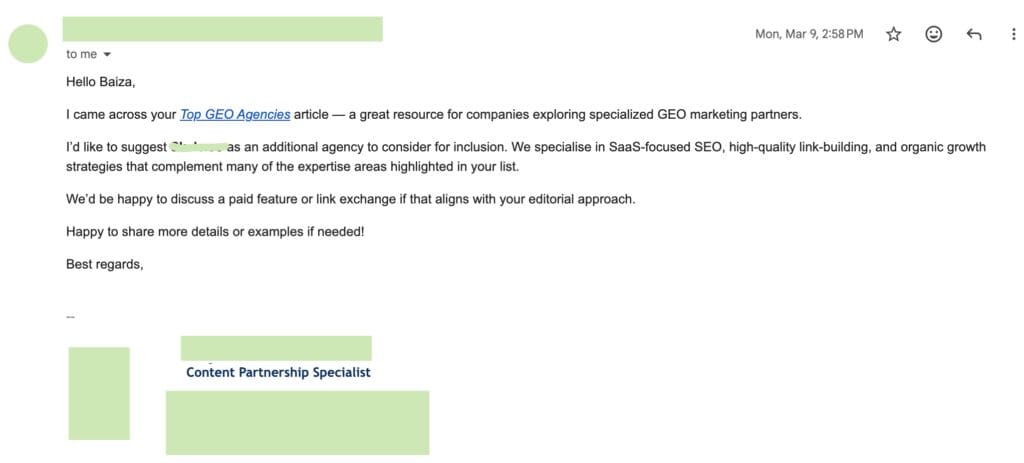
Step 6: Extracting Fan-out Searches for ChatGPT
With our messaging locked in across our own site and the off-site mentions starting to build, the next job was figuring out what content actually needed to be built or rewritten across the rest of our site. But before touching a single page, I needed to know exactly what ChatGPT was searching the web for when someone typed in one of our target prompts.
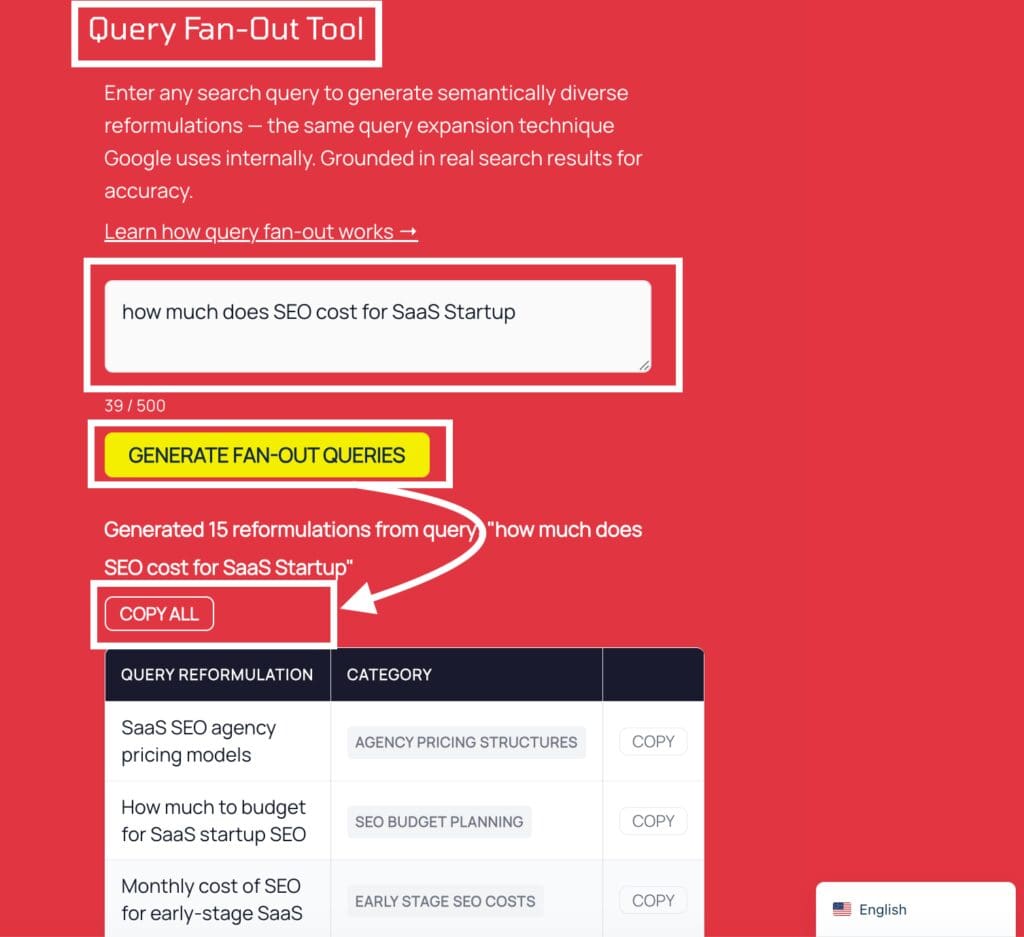
FYI: It’s called query fan-out – a process where, instead of just searching for the one prompt a user types in, ChatGPT breaks it into a number of related searches and pulls information from across all of them to build its final answer. The more of these related searches your content aligns with, the higher your chances of being mentioned and cited in that final answer. Read more about this in our dedicated article on how ChatGPT’s ranking algorithm works.
So I built a tool — Fan-Out Query Extractor — to pull these related searches from ChatGPT’s backend code. This gave me the list of angles ChatGPT was searching for behind every prompt we cared about, which became the blueprint for the content audit I ran next.
Step 7: Doing a Content Audit using our Prompts Data
With a clear picture of how our ideal clients were searching and how ChatGPT was going out to find answers for those queries, I wanted to know if we even had content covering those angles for ChatGPT to pull from.
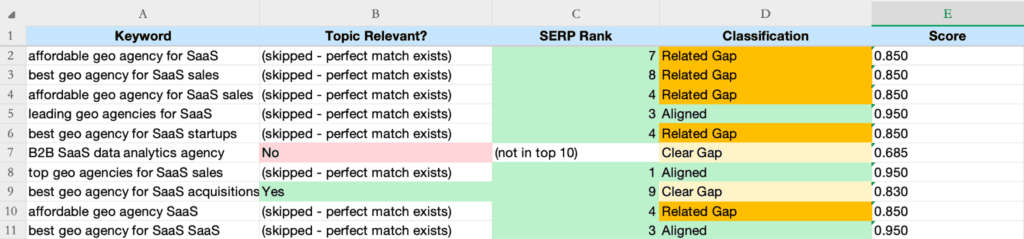
So I took all the fan-out searches we found in step 6, and ran them through this tool called Domain Coverage Analyzer.
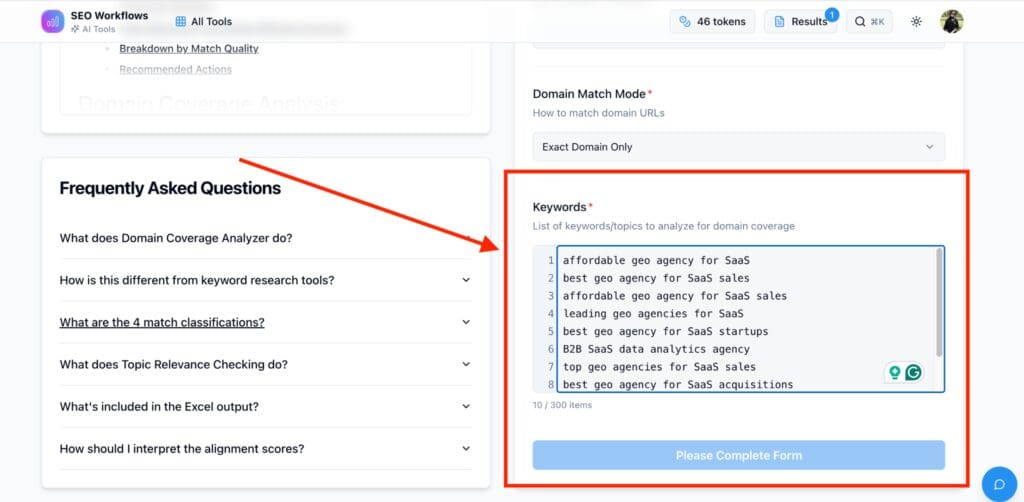
It checks those queries against your site and comes back with a breakdown of your coverage across five categories: No Coverage, Clear Gap, Related Gap, Aligned, and Perfect Coverage. This helped me put together a priority list of what needed a refresh and what new topics we should cover.
Step 8: Refreshed and Created Content Around the Gaps
For anything flagged as a related gap, we went back into existing content and added the missing angles, while paying close attention to how it was written and structured.
Plus (very important!), we updated timestamps on everything we refreshed since ChatGPT heavily favors fresher content.
For “clear gaps” and “no coverage”, we created new content from scratch, prioritising decision-level formats like comparison guides and best-of roundups in our category.
Step 9: Tracking Our Results – How We Know This Worked
I tracked manually at first by running our target prompts regularly and looking for four specific things: mentions, citations, narrative, and sentiment.
For prompts where ChatGPT was pulling from live web results, I’d check whether we were mentioned, cited, or both (both are ideal).
Then I’d check the narrative — was ChatGPT describing us the way we wanted to be described? Our goal was for it to describe Singularity as a B2B SaaS GEO agency for founders scaling from $1M to $10M ARR, not just “a marketing agency.”
Sentiment is worth checking too, though it’s more nuanced than a simple positive or negative score because ChatGPT rarely says anything outright negative. So, what you’re really looking for is how it frames you. If it describes you as “not the best fit for broad, full-service needs” that tells you how it’s categorizing you, and whether that matches how you actually want to be seen.
On the traffic side, tooling for measuring AI-driven traffic is still catching up. Search Console now has AI reporting, but clicks are still missing from that data, so it only tells part of the story. We’ve put together a full guide on how to track AI traffic using a few proxies that fill in the gaps.
At scale, we used Peec.ai, where we’d enter our target prompts and track how different LLMs were describing us over time, what competitors were showing up alongside us, and which sources were influencing ChatGPT’s answers. It gives you a zoomed-out picture that’s hard to get from manual checks alone when you’re further into generative engine optimization (GEO).
Final Thoughts on How to Rank in ChatGPT
For a GEO agency, getting into LLMs was never really optional. We’re the team telling clients these methods work, so if we couldn’t get ourselves out of “wrong company” territory and into “trusted recommendation” territory, what were we even selling?
And that shift is the whole story here. ChatGPT went from confidently describing the wrong company when someone asked about us to consistently recognizing and recommending us to the exact clients we wanted to work with.
We’ve put together a checklist below that covers everything in priority order so you have a clear starting point.
And if you’d rather offload this to a team that’s already done it for themselves, we’re happy to help.
A Practical Checklist to Help to Rank in ChatGPT
☐ AI crawlers can access my pages without technical blockers
- Check GPTBot isn’t blocked in your robots.txt
- Make sure important content isn’t hidden behind JavaScript
- Add schema markup where relevant
- Keep page load times fast
☐ I know what ChatGPT is currently saying about my brand, my market, and who it recommends
- Run the following prompts and note the results:
☐ brand prompts: “What do you know about [brand]”, “who is [brand]”, “what companies does [brand] work with”
☐ market prompts: “What are the best [your category] agencies/tools for [your ICP]”
☐ client prompts: frame yourself as your ICP and ask what ChatGPT would recommend
☐ I’ve mapped the prompts I want to rank for
- Use Ahrefs questions tab, Search Console, or AnswerThePublic to find longer-tailed demand
- Narrow to your specific ICP stage and constraints
- Map decision factors using the 5W1H framework
- Build your target prompt set from those decision factors
☐ My brand messaging is consistent everywhere
- Audit your homepage, service pages, about page, and social profiles against four questions: who are we, what do we do, for whom, and why
- Write your brand message in one sentence, three sentences, and a paragraph
- Update your own site and social profiles with the new brand message
- Get your team aligned so everything going forward says the same thing
☐ I have off-site presence where ChatGPT is actually looking
- Click “sources” on ChatGPT responses for your decision-level prompts to see where it’s pulling from
- Reach out to blogs and publications showing up consistently for mention swaps or guest posts
- Build your review profile on Clutch, Trustpilot, G2, Capterra, and similar
- Build presence on Reddit, Quora, and other UGC platforms your buyers use
☐ I’ve extracted fan-out queries for my target prompts and run a content audit
- Extract fan-out queries using our Fan-Out Query Extractor
- Run those queries through Domain Coverage Analyzer to get a full breakdown of your coverage
☐ I’ve refreshed and created new content around the gaps the content audit surfaced
- For related gaps, go back into existing content and add the missing angles
- For clear gaps and no coverage, create new content from scratch, prioritizing comparison guides and best-of roundups
- Update timestamps on everything you refresh or publish
- For the specifics on writing and structuring content so ChatGPT can actually extract from it, see our guide on writing for LLMs
☐ I’m tracking changes regularly
- Run target prompts manually every few weeks and check for mentions, citations, narrative, and sentiment
- Use Peec AI to track appearances across LLMs at scale over time
FAQs
How long does it take to rank in ChatGPT?
It depends on how competitive your space is, how many content gaps you have, and how strong your off-site presence already is. For us, we started seeing appearances within a few weeks of getting the basics right, whereas consistent visibility in our target prompts took a few months.
Can you rank in ChatGPT like you rank in Google?
No, you can’t. Google ranks individual pages. ChatGPT pulls from multiple sources across multiple background searches to build an answer, so it’s less about one page ranking first and more about showing up consistently across a set of related searches.
Does traditional SEO still matter for ChatGPT visibility?
Yes, good content, clean site structure, and strong third-party mentions all carry over. The difference is that ChatGPT weighs off-site signals, content breadth and consistency, and freshness more heavily than Google does.
Do I need to do all of these steps?
First and foremost, check for technical blockers. If that’s the only thing standing in your way, you may not need to do much else.
After that, yes — this is a complete process, and you’ll want to work through all the steps and keep doing them, because the search landscape shifts fast. That’s just the nature of generative engine optimization. If you need a hand with any of that, we’re happy to dive in. Get in touch.