The four types of SEO in digital marketing are on-page SEO, off-page SEO, technical SEO, and local SEO. For SaaS companies, treating them as equal priorities is a mistake.
On-page and off-page SEO carry the vast majority of the weight because SaaS buyers research and compare extensively before ever booking a demo:
- Gartner found that 75% of B2B decision-makers prefer to avoid sales reps entirely, choosing to work through their options on their own before ever picking up the phone.6sense’s 2025 Buyer Experience Report, which surveyed more than 4,000 B2B prospects, found that 94% of evaluation teams rank their preferred software before reaching out, and they choose that early favorite 77% of the time.
- For SaaS specifically, this means SEO is shaping how a future customer sees you before your reps get the chance to pitch, since they’re actively avoiding that first call.
- On-page content handles the questions they’d otherwise ask a rep, while off-page mentions from sources they already trust do the vouching a salesperson normally would. Together, they convert a self-guided buyer into a demo.
Today, we break down what actually matters across the four types of SEO for SaaS, and where GEO fits into that picture:
TL:DR
- On-page and off-page SEO deserve the bulk of your time and budget as they drive trust and demos
- Technical SEO is not a growth lever; clearing it prevents losing, but investing further won’t win you extra ground
- Local SEO is skippable for most SaaS companies since buyers aren’t searching with “near me” intent
- GEO and AI citations aren’t a fifth type of SEO; it’s an extension of the on-page and off-page fundamentals you should already be building
Which Type of SEO Matters Most for SaaS Companies?
SaaS buyers don’t make quick, location-based purchases. They research independently, compare multiple tools, loop in other stakeholders, and look for proof before they ever book a demo.
To improve your funnel, you need a site that’s discoverable, answers buyer questions directly, and gives people enough reason to keep considering your product. That’s why we place on-page SEO as our first priority.
In our work with clients, we’ve seen plenty of blunders, and a lot of wasted time and money spent on the wrong parts of SEO. When we give strategic advice on what to tackle first, our formula is:
The 4 Types of SEO for SaaS at a Glance
| Type | What It Covers | Priority for SaaS | Why It’s Important |
| On-Page | Site content, keywords, page structure, formatting | 1st | Your content is what buyers learn about, compare, and decide to trust. |
| Off-Page | Backlinks, brand mentions, reviews, PR | 2nd | Buyers use third-party validation to verify vendor claims. |
| Technical | Crawlability, site speed, indexing, structured data | Baseline | A pass/fail gate that you can mostly outsource to good site plugins. It keeps your site accessible but does not drive growth on its own. |
| Local | Google Maps, local citations, “near me” intent | Skip | Mostly location-independent, with exceptions for regulated categories (fintech, payments, HR) requiring country-specific compliance. |
So, let’s break this down:
Priority #1: On-Page SEO, the One That Turns Searches Into Demos
On-page SEO covers the elements you control directly on your website: content, headings, title tags, internal links, metadata, and page structure. SEO-refined content builds buyer trust. It explains your product, breaks down use cases, compares alternatives, and addresses real workflow hesitations.
A future client researching independently doesn’t care how many backlinks you have or how fast your server responds; they care whether the page in front of them actually answers their question.
That starts with proper keyword research: mapping your content to the questions and terms SaaS buyers actually search for. Get that foundation right, and the rest compounds: your pages show up for the searches that matter, answer what buyers are actually asking, and turn that traffic into demos, trials, and pipeline.
Content answers a buyer’s question and makes the case for your product. On-page SEO gets that content in front of them at the exact moment they’re searching for an answer, so the two working together meet a buyer right when they’re ready to be convinced.
How AI Changed On-Page SEO from 2025 to 2026
On-page SEO – writing that fully answers the reader’s question, using clear structure, and targeting the right keywords – became even more critical from 2025 into 2026.
Content now has to do two jobs instead of one: rank at the top of search, and be fully answerable, extractable, and cited on LLMs such as Perplexity and ChatGPT.
High-intent SaaS queries are heavily impacted by this shift:
- 95.4% of “X vs Y” comparison searches now trigger AI Overviews in search results
- B2B tech queries overall have seen AI Overview exposure climb from 36% to 82% over the past year
Modern on-page SEO requires direct answers at the top of key sections, structured comparison tables, and clear subheadings so search engines and LLMs can extract your value proposition with total confidence.
Priority #2: Off-Page SEO, What Convinces Buyers You’re the Real Deal
Off-page SEO includes everything outside your website that builds brand authority: backlinks, unlinked mentions, peer reviews, forum discussions, and digital PR.
When a buyer evaluates competing tools, they know your landing pages will show the best version of your product. Every SaaS website promises flawless features, high ROI, and happy customers, so buyers look elsewhere to see if that holds up. They check G2, read Reddit threads, browse comparison blogs, and ask peers in communities.
If on-page SEO is how you make your case, off-page SEO is how the market verifies it. For SaaS buyers weighing multiple tools, that third-party proof is a key consideration in deciding whether to trust what you’ve said about yourself.
How AI Changed Off-Page SEO from 2025 to 2026
Backlinks still matter, but the strategy shifted away from chasing raw link volume toward building a credible, multi-platform reputation.
In 2026, search engines and AI models read authority through brand sentiment, not just backlinks. They analyze brand mentions across the platforms where real decisions happen:
- Are you actively discussed in Reddit threads?
- Do you have verified user reviews on G2 and Capterra?
- Is your product cited in industry publications and analyst reports?
- Are you mentioned across peer comparison hubs?
Off-page mentions directly drive visibility in AI answers. In our Careerflow case study, we helped their brand earn 192 AI Overview citations. We achieved these results by building mentions across platforms throughout the marketing funnel, prompting AI systems to repeatedly surface the brand as a verified source.
Off-page SEO for SaaS is a reputation management engine that turns third-party validation into market consensus.
Priority #3: Technical SEO, Foundational but Not Your First Growth Lever
Technical SEO covers site architecture, crawlability, site speed, indexing, structured data, and page rendering: everything required to ensure search engines can properly access and parse your pages.
For most SaaS companies, technical SEO is necessary, but it doesn’t drive growth on its own. Modern web platforms and out-of-the-box CMS setups handle the vast majority of baseline technical requirements, so you can easily outsource that work.
Once your site is fast, indexable, and free of crawl errors, spending additional budget on minor technical tweaks yields diminishing returns.
The SaaS Technical Blind Spot: JavaScript and AI Crawlers
Here’s one exception worth knowing: how your site is built can matter a lot.
Many SaaS sites use JavaScript, code that builds the page after it loads in your browser, instead of sending a finished page right away. Google has gotten better at reading these pages over time, but AI tools like ChatGPT and Perplexity often can’t see content that only appears after that code runs. So a page can look perfectly normal to a visitor, and still be invisible to AI search.
If your site works this way, make sure your most important pages, like pricing and product pages, are still readable without relying on JavaScript.
Local SEO, Usually Skippable for SaaS
Local SEO focuses on capturing location-based intent through Google Business Profiles, “near me” queries, geotargeted landing pages, and local directory citations.
For the vast majority of SaaS companies, local SEO is an unnecessary distraction.
Since software is delivered, onboarded, and used remotely, a buyer evaluating project management tools doesn’t care whether your head office is in Austin, London, or three blocks down the street. “Near me” intent simply does not apply to standard SaaS products.
Burning time on local citations, Google Maps optimization, or city-specific landing pages yields virtually zero pipeline for remote software. Those resources are far better allocated toward building on-page comparison hubs or earning off-page reviews on G2 and Capterra.
The Exceptions Where Local SEO Matters for Saas Companies
There are a few edge cases where local SEO does make sense for software brands:
- Hybrid or In-Person Sales Motions: SaaS companies that rely on localized field sales teams or regional account managers closing enterprise deals in person.
- Regional Compliance Requirements: Software where physical data residency or country-specific legal frameworks dictate vendor selection.
- Software Bundled with On-Site Services: Platforms that pair cloud software with physical hardware installation, maintenance, or on-site consulting.
Unless geography directly affects how your software is purchased or delivered, your team can safely skip local SEO entirely.
Where Does Generative Engine Optimization (GEO) Fit In?
Before adjusting your strategy, it is worth acknowledging what has not changed: helpful content, brand credibility, and a technically accessible website still matter. AI did not erase the core fundamentals of SEO, nor did anyone invent a shiny fifth category.
What changed is how content gets surfaced: shifting from ranking full web pages to earning direct citations inside AI answers. In early 2025, AI Overviews appeared on roughly 6.5% of search queries; today, in 2026, they will trigger on 48% to 50% of US searches.
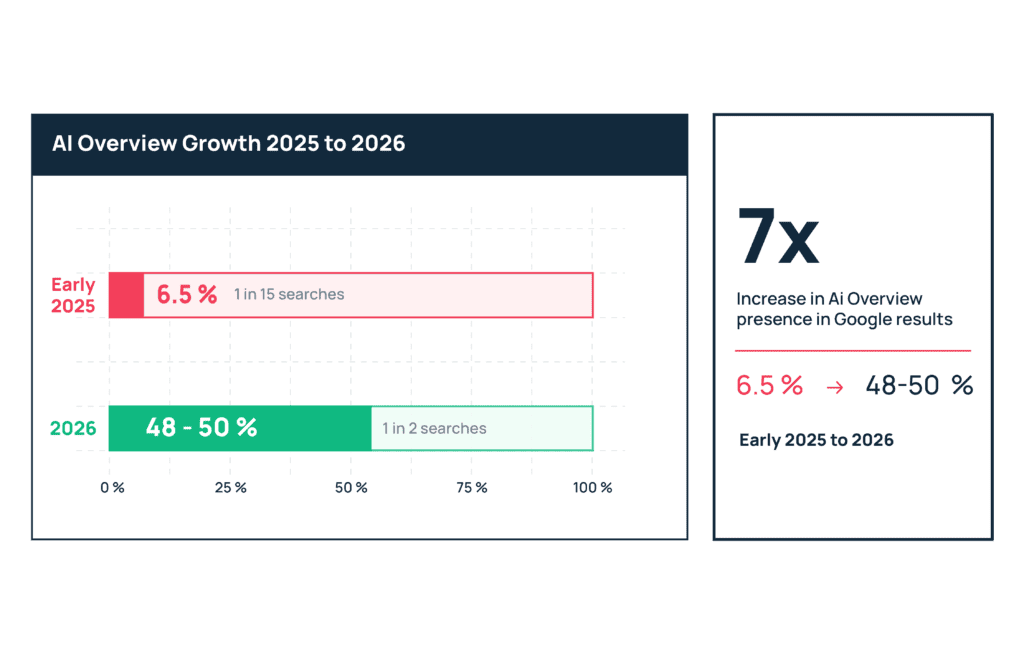
In 2025, winning at SEO meant earning a top position on a search engine results page and waiting for a click; now, that same content must also compete for direct extraction inside AI-generated responses.
Generative Engine Optimization (GEO) is the practice of structuring your content and brand authority so AI search tools (like ChatGPT, Perplexity, and Google AI Overviews) extract, quote, and cite your product in their answers.
Because GEO has its own acronym, many wonder whether it is a shiny fifth type of SEO to add to their workload. We see it differently: SEO and GEO share the same foundation, but they optimize for two different discovery mechanics.
Understanding this distinction helps you avoid treating GEO as a shiny new tactic, and instead use it as a strategic lens on the work you are already doing.
SEO vs. GEO: A Side-by-Side Comparison
| Feature | Traditional SEO | Generative Engine Optimization (GEO) |
| Primary Focus | Ranking your website on Google’s organic results page. | Getting cited or quoted inside an AI-generated answer. |
| What Earns Visibility | Keyword relevance, backlinks, page speed, and crawlability. | Clear structure, direct answers, and mentions on sources AI models trust. |
| Key Signals | Backlink count, domain authority, and on-page optimization. | How trustworthy and well-known your brand is, whether your content gives AI clear facts to pull from, and how often you show up on review sites and peer forums. |
| Proof Point | Holding position 1 to 3 for a target keyword. | Earning consistent citations in AI-generated answers across relevant, funnel-wide queries. |
What GEO Asks For That Classic SEO Ignored
Both SEO and GEO benefit from strong on-page SEO with clean page hierarchy, good formatting, and direct answers. They both benefit from third-party mentions, including backlinks. But while the foundations overlap, Generative Engine Optimization introduces two strategic requirements that traditional Google SEO rarely emphasized:
- Clear Chunking: Traditional SEO allowed for long narrative build-ups, with context scattered across a 2,000-word article. GEO requires structuring your content into concise chunks. An AI model needs to extract a single paragraph and have it make complete sense without reading the rest of the page.
- Unlinked Brand Sentiment and Consensus: Classic Google SEO focused heavily on single-page keyword signals and hyperlinks. LLMs do not rely solely on links; they synthesize unlinked brand mentions from peer-review channels (G2, Capterra), community discussions (Reddit, Quora), and analyst reports to build category consensus.
If you want a deeper breakdown of how these strategies align, check out our full guide on SEO vs GEO.
Final Take: Which Types of SEO Matter Most for SaaS?
For SaaS companies, gaining search visibility and improving your marketing pipeline with SEO comes down to a clear hierarchy: on-page SEO, off-page SEO, technical SEO, and possibly local SEO.
Generative Engine Optimization (GEO) is not a fifth type of SEO. It is a modern lens for executing on-page and off-page work: when you structure clear, entity-dense content and build authentic market credibility, you win traditional search rankings and AI citations at the same time.
Knowing the priority order is one thing; putting it into practice is another. A few of our other guides can help you get started on each piece:
- Keyword research for SaaS to find the right on-page opportunities,
- Building SaaS content clusters to structure that content for authority,
- Writing for LLMs to ensure what you publish is citable by AI search.
Turn Search Traffic Into Revenue
Now that you know how the four types of SEO work together with GEO, reach out if you’d like to talk through what that looks like for your SaaS company! We help SaaS teams turn SEO and GEO into a practical plan for pipeline growth.