
What is prompt tracking and why it matters
- Prompt tracking is monitoring how prompts are used in AI systems, focusing on their formulation, frequency, response quality, and performance metrics.
- Prompt tracking also includes versioning of prompts, which means keeping a controlled record of changes made to prompts over time to ensure consistency, and continuous improvement.
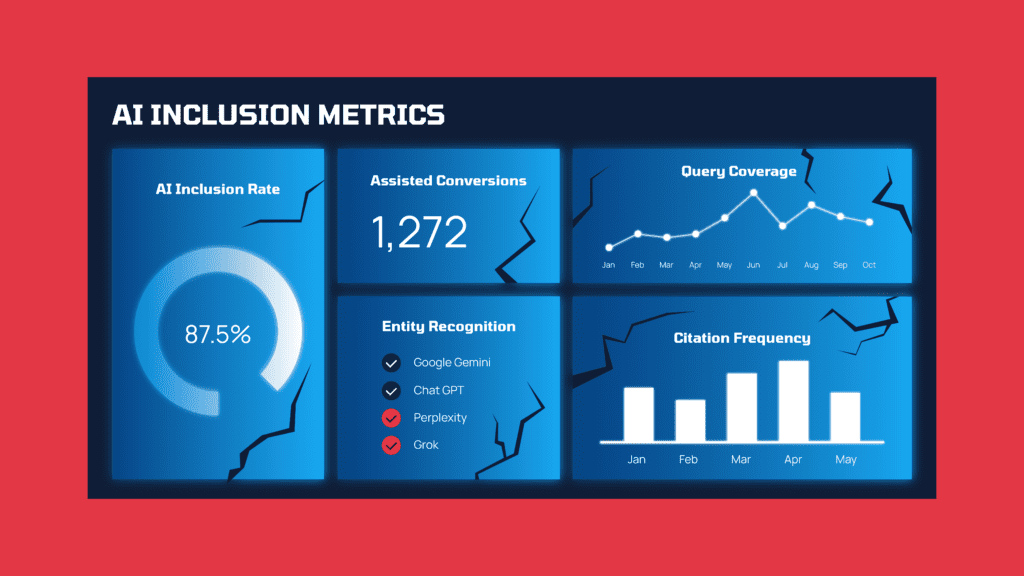
- It allows businesses to monitor how and where their brand is mentioned or cited within AI-generated content and generative AI platforms.
- Tracking provides insights that go beyond traditional search metrics, revealing the new patterns in how users discover brands through AI responses rather than standard search engines.
- Enables companies to benchmark their presence against competitors, identify influential content sources, and adapt strategies to enhance relevance and visibility in AI-driven environments
- From a sales pipeline perspective, tracking AI prompts helps optimize lead qualification and prioritization by understanding customer behavior and engagement patterns through AI interactions
- Supports decision-making in marketing and sales by providing actionable insights from prompt analysis, thus improving campaign targeting, content effectiveness, and overall conversion rates.
- Tracking prompts also broadens access to analytics, speeding up response times and fostering better alignment between marketing efforts and audience needs.
- Altogether, monitoring AI prompts is key to staying competitive in a marketing landscape increasingly influenced by generative AI.
- Contrast with SEO: Unlike traditional search, AI outputs prioritize synthesized recommendations rather than link structures. This means that your brand’s presence in AI-generated answers depends on consistent visibility, structured content, and relevance to user queries. Being included repeatedly across multiple prompts and platforms helps build recognition and influence.
How to choose prompts to track
- Prioritize high-intent prompts: Focus on questions that indicate readiness to buy, compare, or shortlist vendors.
- Why? High-intent prompts capture users’ active buying signals rather than generic or informational queries. This allows brands to pinpoint moments that matter for conversions, helping teams allocate resources effectively, tailor messaging, and influence the sales pipeline with content and responses designed to meet the buyer’s needs.
- How?
- Identify prompt phrases showing purchase intent, such as “best product for X,” “compare vendor A and B,” “pricing options,” or “how to choose the right [product/category].
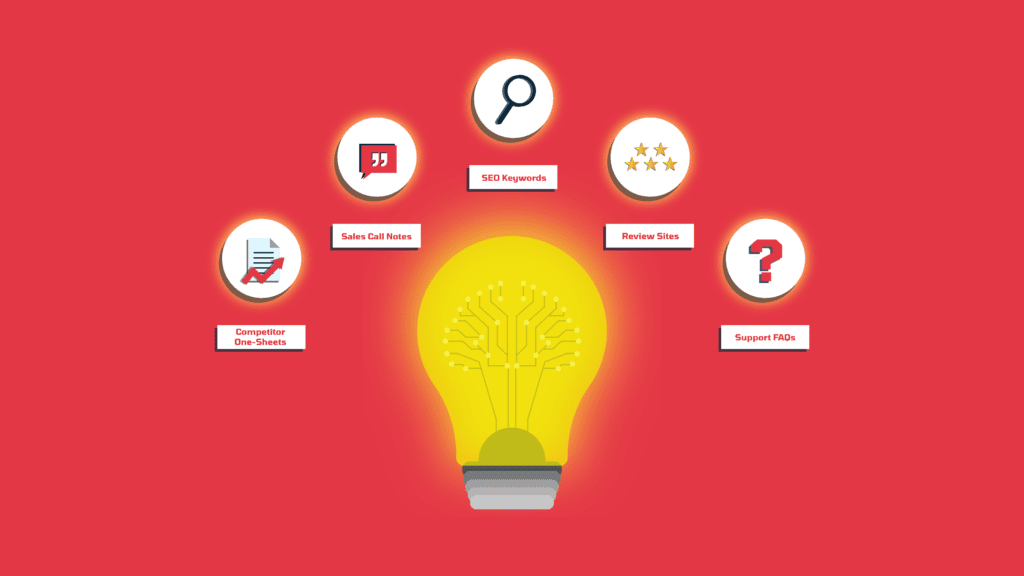
- Use real data to seed prompts, from sources like top SEO keywords that convert (These keywords represent real user search queries with demonstrated commercial intent, driving organic traffic that results in conversions. Using them ensures prompts align with what users actively seek when ready to buy or compare options.); Sales calls notes (These capture actual buyer conversations, revealing natural language questions, concerns, competitive comparisons, and objections.); review sites (Reviews contain authentic user sentiment, preferences, and product feature discussions. Extracting prompt ideas from reviews captures buyer language and criteria, helping tailor AI prompts to resonate with prospective customers); competitor one-sheets (These summarize competitor offerings and differentiators, useful for generating prompts focused on comparison, unique selling points, and positioning questions. This helps brands anticipate buyer comparisons and craft targeted prompts that showcase advantages.); support FAQs ( reflect common customer pain points and decision-making questions during the buying journey. Prompts based on FAQs help address frequent concerns, improving the quality of AI responses and guiding prospects toward purchase readiness.)
- What defines “ readiness to buy” in a prompt? When Includes comparative language (e.g., “compare,” “best,” “top-rated”) indicating evaluation between options; Asks about pricing, features, or benefits directly relevant to decision-making; Reflects urgency or intent to act soon (e.g., “where to buy,” “discount,” “availability”); Includes phrases that signal narrowing down choices, like “shortlist,” “review,” or “recommendation.”
Prompt Categories to Track
Tracking a broad but organized range of prompt categories ensures comprehensive visibility into buyer intent stages and AI interactions, from early research to purchase decision:
Best-of prompts
- What they are: User questions asking for the best product or solution for a specific use case or ideal customer profile (ICP).
- Example: “Best project management software for remote teams” or “Best CRM for small B2B SaaS.”
- Why they matter: These prompts indicate early to mid-funnel buyers who are actively shortlisting options. helps capture highly qualified leads at the evaluation stage.
Comparison prompts
- What they are: Queries comparing your SaaS to competitors on features, pricing, or suitability.
- Example: “Salesforce vs HubSpot for startups” or “Monday.com vs Asana pricing comparison.”
- Why they matter: These reflect late-stage buyers narrowing down choices. Tracking them reveals positioning gaps and competitive weaknesses your messaging should address.
Prompts Shaping Your Brand
AI answers influence decisions fast. Find out which prompts shape how your brand shows up and how to improve them.
Integration/stack prompts
- What they are: Questions about software ecosystem compatibility or integrations with other tools in the tech stack.
- Example: “Tools that integrate with Salesforce CRM” or “Best marketing automation software compatible with Slack.”
- Why they matter: Integration capabilities often influence purchase decisions. Tracking these helps identify partnership and co-marketing opportunities and improve messaging on ecosystem fit.
Industry/regulatory prompts
- What they are: Queries specifying use case within an industry or compliance context.
- Example: “Top SaaS for healthcare needing HIPAA compliance” or “Best accounting software for fintech startups.”
- Why they matter: These niche prompts reflect buyers with specialized needs.
Brand safety/negative prompts
- What they are: Questions expressing doubts or negative perceptions about your brand.
- Example: “Salesforce complaints.”
- Why they matter: These highlight reputation risks or misinformation. Monitoring them allows proactive content correction, damage control, and trust-building efforts.
Industry Specific Needs That Drive Qualified Demand
- What they are: Specialized queries addressing unique functional needs or emerging trends.
- Example: “SaaS with AI-powered analytics for ecommerce” or “Low-code SaaS for financial modeling.”
- Why they matter: These signals identify fast-evolving or high-growth niches. Tracking them guides product development priorities and targeted marketing.
How to Track Prompts Effectively
Purpose: Set up a repeatable, practical system to monitor prompts, capture results, and identify trends.
Key Points:
- Expect variability: AI answers change over time; focus on trends, not single results.
- Why?
- Why do they change? AI responses evolve as models update, training data shifts, and usage patterns change. This dynamic nature means single prompt results are not static or guaranteed to repeat.
- Why focus on trends? Monitoring overall trends over time rather than isolated responses reveals meaningful patterns in prompt effectiveness, brand visibility, and audience engagement.
- Why is a single result undesirable? A snapshot AI answer can be influenced by random sampling, model state, or temporary context, making it unreliable for decision-making.
- How?
- How do we focus on the trend? What do we look for? Collect and analyze prompt performance data regularly to spot upward or downward patterns in AI response quality, relevance, or brand mention frequency. Look for shifts in sentiment, prompt rankings, and content freshness associated with tracked prompts.
- How often? Track core, revenue-impacting prompts monthly to catch emerging changes quickly and optimize continuously.
- Where?
- Where do I do this tracking for focus?
- Why?
- Consistent approach: Use the same region, logged-out state, and model version; track the same prompts regularly.
Methods and Tools for prompt tracking
Manual tracking: Run prompts in key AI assistants (ChatGPT, Bard, Perplexity) and log outputs with timestamps, model/version, and parameters.
Lightweight automation: Use APIs or evaluation tools where allowed; follow platform terms.
Centralize results: Shared sheets or BI tools to monitor presence, rank, sentiment, and accuracy.
Add metadata: Track source type (chat, overview, snippet) and prompt variations.
Visualize trends: Plot share of answer, frequency, and sentiment; highlight gaps versus competitors.
Test variations: Reword prompts and cluster similar prompts to find the phrasing that triggers AI recommendations most reliably.
Feedback loop: Use insights to update content, schema, and entities to improve AI visibility.
Starter Prompt Set for B2B SaaS Founders
Purpose: Provide a ready-to-use template for high-value prompts.
Examples:
- Best-of prompts: “Best [category] for [ICP] at [team size/budget] with [key integration].”
- Comparison prompts: “[Brand] vs [Competitor] for [use case/budget].”
- Integration prompts: “Tools that integrate with [CRM/IDP] for [department] to [outcome].”
- Industry/regulatory prompts: “Top [category] for [industry] needing [compliance].”
- Migration/consolidation prompts: “How to migrate from [tool] to [category] with minimal downtime.”
Common Mistakes When Tracking Prompts
Purpose: Avoid common mistakes when tracking AI prompts.
Key Points:
- Don’t focus on low-value or vanity prompts; prioritize those tied to pipeline and ARR.
- Expect variance across models and regions; rely on trendlines and ranges instead of single scores.
- Neglecting prompt versioning and history: Without recording prompt iterations and past performance, it’s difficult to gauge improvements or regressions.
- Overlooking qualitative evaluation: Relying solely on quantitative metrics without assessing AI output relevance, coherence, and tone reduces insight accuracy.
- Failing to address bias and ethical concerns: Ignoring potential biases or misinformation in AI responses risks reputational harm and compliance issues.
Conclusion and Next Steps
Tracking AI prompts is no longer optional for B2B SaaS brands — it’s how you stay visible where buyers are actively evaluating solutions.
- What to track: Focus on high-intent prompts that indicate buying signals, comparative evaluations, or niche requirements. Include categories like best-of, comparison, integration/stack, industry/regulatory, and brand safety/negative prompts.
- Why it matters: These prompts reveal how AI surfaces your brand, highlight gaps versus competitors, and uncover buyer phrasing and intent that directly influence pipeline and revenue.
- How to track: Establish a repeatable system; monitor prompts consistently, analyze trends over time, cluster similar questions, and combine quantitative metrics with qualitative assessment to understand context and accuracy.
Next steps for your team:
- Audit and prioritize prompts based on buyer intent and revenue impact.
- Track mentions and visibility across AI platforms, logging metadata and versions.
- Analyze trends and gaps versus competitors, cluster prompts, and identify opportunities.
- Refresh regularly to align with product updates, buyer behavior, and evolving AI models.
By following these steps, you turn prompt tracking into a practical lever — improving brand presence in AI-generated shortlists, capturing high-intent buyers, and driving measurable impact on your marketing and sales pipeline.
Prompts Shaping Your Brand
AI answers influence decisions fast. Find out which prompts shape how your brand shows up and how to improve them.
FAQS
What is prompt tracking and how is it different from keyword tracking?
Prompt tracking involves monitoring the specific, often detailed questions or instructions users input into AI systems, focusing on how your brand appears in AI-generated answers. Unlike keyword tracking, which tracks short phrases people type into traditional search engines, prompt tracking captures natural, conversational queries that AI platforms interpret with context. This makes prompt tracking crucial for visibility in AI-driven discovery, going beyond simply ranking for keywords.
How do I choose which AI prompts to monitor for my brand?
Choose prompts that reflect high commercial intent—queries showing readiness to buy, compare, or shortlist vendors. Look for phrases like “best product for X,” “compare vendor A vs B,” or “pricing options.”
Can you measure search volume for AI prompts?
Measuring exact search volume for AI prompts is more complex than traditional keywords because prompts are longer and more conversational, varying widely. However, you can analyze trends and frequency of prompt usage across AI platforms using specialized AI monitoring tools, giving you a directional sense of prompt popularity and your brand’s visibility within AI-generated responses.
How often should I review and update my prompt list?
Review and refresh core, high-impact prompts monthly to keep pace with evolving AI models and buyer behavior. For broader or exploratory prompt sets, a quarterly review balances resource efficiency with responsiveness to changes. Regular updates ensure your brand remains visible and relevant in AI-driven discovery.
How can I improve my brand’s chances of being recommended by AI tools?
Improve your chances by optimizing for high-intent prompts with accurate, well-structured content aligned to buyer phrasing. Ensure your website and digital assets use structured data and schema markup to help AI understand your offerings. Build authoritative backlinks and keep content fresh to signal relevance. Lastly, consistently track AI prompt performance and update your strategies based on insights to stay competitive in AI recommendations.