
You start publishing content, building backlinks, optimizing pages… your SEO program is up and running. But without a clear attribution setup, you can’t tell what’s working. Sales calls get logged as “paid” because that was the last-click channel, while SEO actually nurtured the buyer all the way there.
This results in you investing more in expensive acquisition channels and overlooking the compounding ROI of organic growth.
Measuring SEO ROI involves a lot of moving parts, but having a clearer picture of where your leads and customers come from is critical. This guide is here to help you do that.
TL:DR
- SEO drives long-term ROI in SaaS, but poor attribution hides its impact and can lead teams to over-invest in high-CAC channels.
- A strong SEO ROI system includes:
- Multi-touch attribution
- CRM integrations
- Revenue tracking
- Funnel-stage mapping
- Cohort and content performance analysis
- When done right, SEO can become your highest-leverage growth channel: lower CAC, higher LTV, and compounding results over time.
- It’s never too late to set up tracking, even when your program is running full-speed.
Understanding SEO ROI and the Unique Challenges for SaaS
At a basic level, SEO ROI is calculated using a simple formula:
SEO ROI = (Revenue attributed to SEO − total SEO costs) ÷ total SEO costs × 100.
But that’s easier said than done.
B2B SaaS companies deal with long sales cycles, multiple decision-makers, and complex buying journeys – all of which make it hard to pinpoint exactly how SEO influenced a deal, or when.
A potential customer might read a blog post, sign up for a webinar two weeks later, talk to sales a month after that, and convert three months down the line. In such cases, SEO often initiates the journey, but by the time the deal closes, it’s easy to forget how they got there.
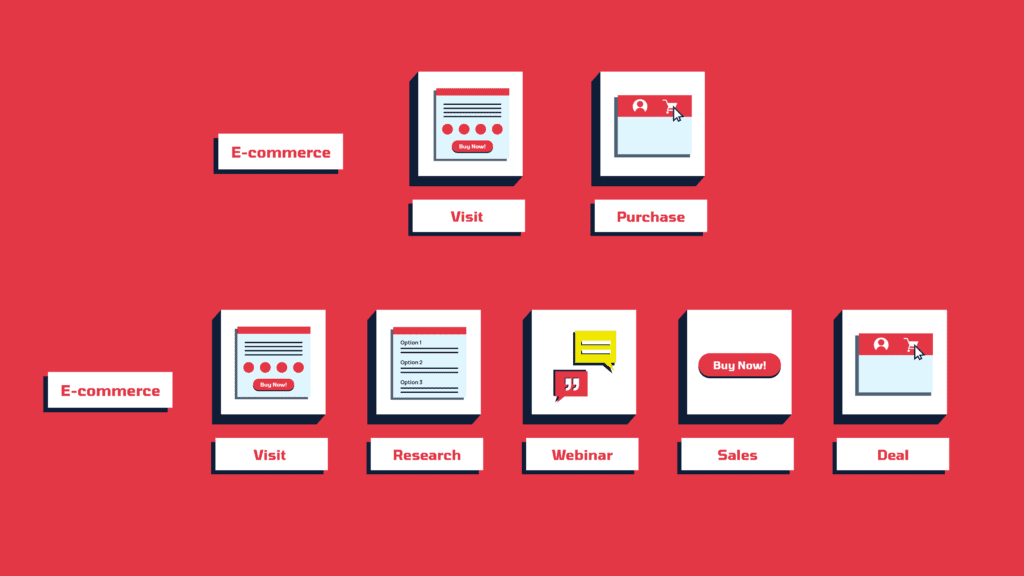
On top of that, many SaaS businesses operate on recurring revenue models, which means the full value of a customer is realized over time. So even when SEO plays a major role in acquisition, the financial impact isn’t always visible right away.
So how can you track to understand what’s working?
Crucial SEO Metrics for SaaS ROI Measurement
To understand the value of SEO to your business, you have to move beyond surface-level metrics like “keyword rankings” or “traffic volume”. Here are the metrics that matter most when you’re trying to measure the true impact of SEO in a SaaS context.
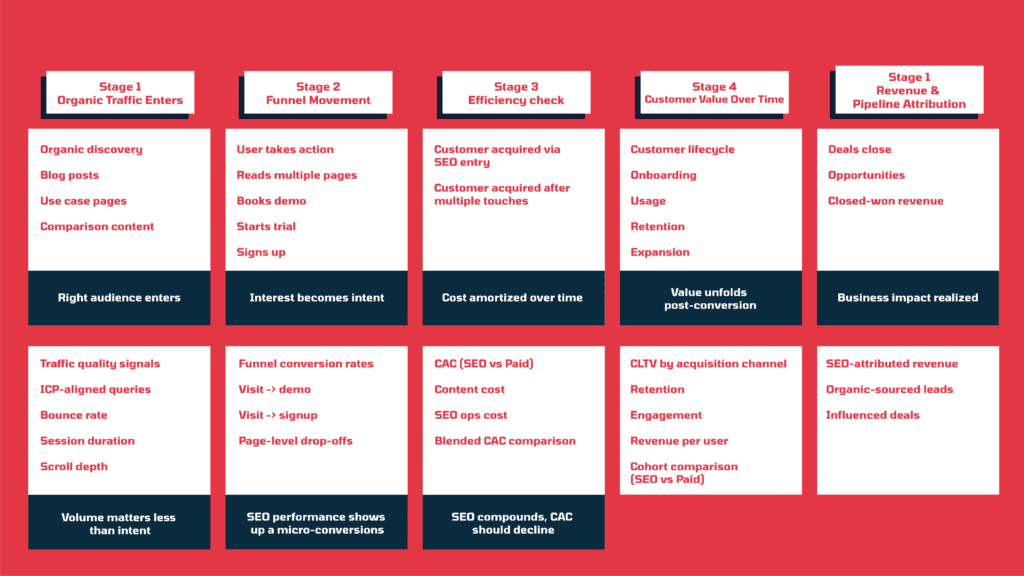
1. Organic Traffic Growth
Organic traffic growth is a core function of SEO, but you need to ensure that you are drawing in qualified traffic: people who match your ICP, search with intent, and are interested enough in your offerings to explore.
Otherwise, you will drive a ton of page visits with no new customers to show for it.
Signs you are getting in front of the right audience include:
- Low bounce rates
- High session duration
- Good scroll depth
- Repeat visits
- Navigation to high-intent pages (features, pricing, demos)
2. Funnel Conversion Rates
Once you’re getting the right people through the door, the next question is: are they taking action?
Funnel conversion rates track how organic visitors move through your funnel, from landing on a blog post to booking a demo, signing up for a free trial, or creating an account. These micro-conversions are a better indicator of SEO performance than rankings alone.
Over time, these patterns help you identify which pages or topics are working, and where there’s a drop-off that you need to reassess.
3. Customer Acquisition Cost (CAC)
Customer Acquisition Cost (CAC) is the total cost of acquiring a new customer, including content production, SEO tools, internal time, agency support, and any ongoing optimization or link building efforts, divided by the number of customers acquired through that channel.
What makes SEO different from paid or outbound acquisition is how much CAC changes over time. Early on, SEO CAC is usually higher because you’re front-loading costs while traffic and conversions are still ramping up. But as content starts ranking, attracting qualified traffic, and converting consistently, those same assets continue to drive customers without proportional increases in spend. As a result, SEO CAC typically decreases over time.
To make this useful, calculate your SEO CAC over a set period, then check it again six months and a year later. Ideally, as content continues to rank and bring in customers without the same increase in spend, SEO CAC should go down over time. This makes it easier to show the long-term efficiency of SEO compared to other acquisition channels.
4. Customer Lifetime Value (CLTV)
It’s not enough to track what it costs to acquire a lead, you also want to know what they’re worth over time to get a true picture of ROI and know where to double down and what to improve.
You can surface this (lifetime value of a customer) by tracking users acquired via SEO as their own cohort in your analytics platform (vs paid ads, vs socials or anything else), then monitoring metrics like,
- retention
- engagement
- repeat purchases
- and revenue generated over time.
From there, you can compare how long different cohorts stick around, how often they return, and how much they spend.
For example, your organic traffic might have higher long-term retention but slower conversion times, while paid traffic may convert quickly but churn faster. With these insights, you’d have clarity on which channels bring in more valuable users.
5. SEO-Attributed Revenue and Pipeline Growth
Tying any marketing activity to revenue is both critical and difficult.
Here are three good places to start:
Look at how many demo requests or sign-ups you’re getting each month, specifically from organic traffic. That gives you a read on one portion of leads your SEO content is driving.
Embed demo forms on your key landing pages and include a “How did you hear about us?” field. This small UX change can help with first touch attribution.
On the backend, use tools like HubSpot help connect those leads to opportunities and closed-won deals. Even if SEO was just the entry point, you’ll start spotting patterns like certain pages or queries that keep showing up in journeys that end with revenue.
Setting Clear, Revenue-Aligned SEO Goals
SEO supports growth in many ways: it drives organic traffic, educates buyers, supports product positioning and market expansion. To communicate this critical work, you should be able to tie major SEO goals to your company’s business goals.
For example, if a business goal is to increase demo volume from mid- and bottom-of-funnel traffic, an SEO goal might focus on improving visibility for solution, feature, and comparison queries. If the business is prioritizing pipeline quality, an SEO goal might center on attracting higher-intent traffic that converts into product-qualified and sales-qualified leads.
From there, you can create benchmarks that help track progress toward those goals. This might include:
- Top 3 keyword rankings for BOFU queries by the end of the quarter
- Month-over-month growth in organic sessions to solution, feature, and comparison pages
- Organic conversion rate to trial, demo, or product-qualified lead above a defined baseline
- Number of sales-qualified leads or opportunities influenced by organic search per month
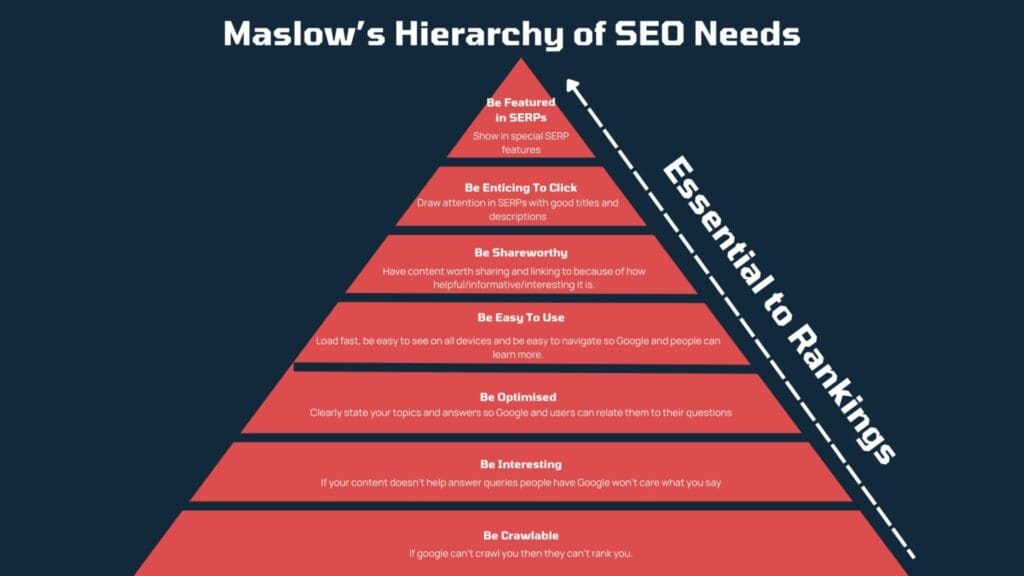
If you are thinking about creating SEO goals, it can be helpful to tie them to the hierarchy of SEO needs, which may highlight the most impactful areas your SEO program can improve on.
Once your goals and benchmarks are clear, the next step is making sure your analytics setup can actually capture their business impact.
Most importantly, it should reflect the real value of each conversion. That means,
- Assigning goal values (e.g., assigning a $20 value to a trial sign-up based on its average conversion-to-paid rate),
- Tracking event-based actions (like “Start Trial” or “Submit Demo Request”), and
- Enabling multi-touch attribution, so organic visits get the credit they deserve—even when the user converts later through a different channel.
So whatever tool you’re using, GA4, HubSpot, Segment, or a custom analytics stack, make sure you illuminate the path from organic session to revenue. Otherwise, you won’t be able to make the case for more SEO investment, even if it’s doing its job perfectly fine.
Attribution Models for Accurate SaaS SEO Measurement
Attribution helps you figure out which parts of your SEO strategy actually drive revenue.
Let’s look at the three main attribution models and how they apply to different SaaS setups.
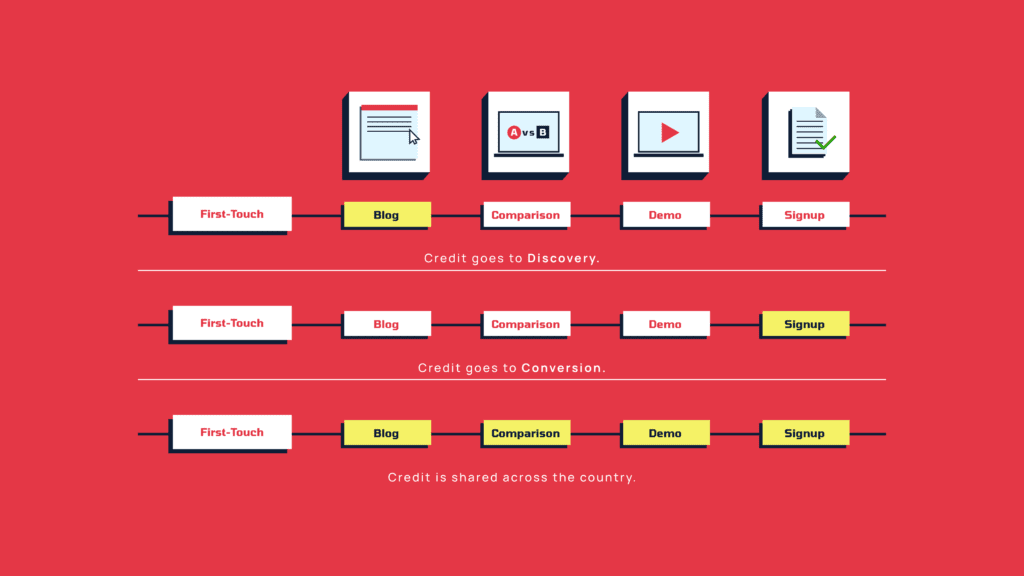
>> First-touch attribution gives all credit to the user’s first interaction with your site, which is often a blog post, SEO landing page, or top-of-funnel guide. This model is useful when you’re trying to understand how new users discover your product, especially in awareness-stage content strategies. But it tends to overlook the nurturing process that follows, like product comparisons, use case content, webinars, or emails, that drive conversion.
>> Last-touch attribution, on the other hand, gives full credit to the final action before a user converts. That might be a pricing page visit, demo request, or product signup. It’s a common default in many analytics setups, and while it can show you what closes the deal, it underrepresents all the early SEO work that created that opportunity in the first place.
>> Multi-touch attribution distributes credit across the entire customer journey while highlighting how different SEO assets (like blog posts, comparison pages, or feature breakdowns) contribute at different stages. This model is most suitable for SaaS companies with longer sales cycles, PLG motions, or complex buying committees. It lets you see ALL that SEO drives – from discovery, to education, consideration to retention.
Tools like GA4’s model comparison feature can help you get started. But for more clarity and confidence in your numbers, SaaS-focused platforms like Dreamdata, HockeyStack, or even custom BI dashboards can give you a full-funnel view that aligns organic activity with pipeline and revenue.
Essential Tools to Measure and Visualize SaaS SEO ROI
Getting accurate SEO ROI data is all about having the right setup to surface the numbers that matter.
Google Analytics 4 (GA4) and Google Tag Manager (GTM) are foundational to all SEO measurement setups. They track everything from a variety of web traffic and user actions.
Product analytics tools like Amplitude help connect website activity with in-app behavior. When combined with consistent user identifiers from GA4, they make it possible to trace SEO-driven users from first visit through feature usage, engagement, and retention.
CRMs such as HubSpot support pipeline and revenue attribution. HubSpot links content to contacts, contacts to deals, and deals to revenue, helping surface how organic search contributes to lead quality, opportunities, and MRR over time.
Attribution platforms like Dreamdata or HockeyStack are commonly used to handle more complex, multi-touch journeys. These tools combine marketing and sales data to show how organic content appears across multiple visits, channels, and decision points before a deal closes.
Reporting and visualization tools, like Looker Studio dashboards, help bring this data together. These are most useful when configured with business-specific inputs such as average contract value, sales cycle length, and trial-to-paid conversion rates, rather than focusing on traffic metrics alone.
Common Pitfalls When Measuring SaaS SEO ROI
Only tracking the basic (and most obvious) wins, such as traffic growth, keyword rankings, and backlinks. To fully understand whether SEO is moving the business forward, it’s also important to track a small set of follow-on metrics like organic CTR, engagement rate, organic conversion rate, product-qualified leads from organic, and pipeline or deals influenced by search.
Settling for ease instead of accuracy. While quantifying rankings, sessions, and backlinks is easier than figuring out how many blog readers became customers two months later, they only show part of the picture. And when reporting stops at these easy metrics, SEO’s true contribution to revenue stays unclear, which makes it harder to justify continued investment or adjust strategy based on what’s actually working.
Expecting too much, too soon. SaaS sales cycles are often long and complicated. Someone might read your content today, sign up for the product in six weeks, and convert to paid months later. So when you report SEO influence on revenue, make sure to take into account the right time frame for your product’s sales cycle.
Benchmarks and Realistic Expectations for SEO ROI
There’s a stat from First Page Sage that gets passed around a lot. It says that B2B SaaS companies average an SEO ROI of around 700%. And yes, that’s a real number, but it’s also an average across many companies.
So while it’s useful as a ballpark, it’s not realistic for every team. Here are some things that will affect your benchmarks:
- Timeline: Some traffic gains might show up within three months, especially if you’re fixing technical issues or republishing existing content. But the full benefit of the steady, compounding ROI that justifies your content investment can take six to twelve months, sometimes longer.
- Program maturity: Teams building SEO from scratch will see different results than those improving an existing foundation with content, links, and authority already in place.
- Industry competitiveness: Entering a crowded market with established players usually means slower early returns compared to more niche or underserved spaces.
- Sales cycle complexity: Longer or more complex buying journeys delay visible revenue impact, even when SEO influences demand and education earlier on.
The most useful way to think about SEO is as a channel that compounds over time, giving you an opportunity to benchmark against your own past performance. The investment you put in pays off again and again, often without much additional short-term lift, meaning it can be an economical channel compared to those like paid acquisition or affiliate marketing.
Because of that, SEO ROI is better evaluated over time rather than in isolated snapshots. Reporting that tracks changes in visibility, engagement, conversions, and pipeline across longer periods makes it easier to set realistic expectations and understand how SEO is contributing as the program matures.
Continuous Optimization for Sustained Returns
For your ROI to keep growing, you have to keep checking in, looking at what’s performing, what’s slowing down, and what needs attention.
A quick monthly or quarterly review of the numbers can go a long way in helping you catch useful patterns early. This can help you double down on what works or spot potential improvements.
In SEO, some of the most effective improvements can be low-effort, like:
- updating an old blog post that’s slipping in rankings,
- improving internal links between related pages,
- or tightening up the CTAs on content that’s already getting traffic.
These tweaks add up over time.
They also give you clear progress to report on. When you spot a win, like a post driving more qualified leads or a content refresh that bumped rankings, share it. It makes the impact of SEO more visible and keeps stakeholders engaged and invested in the channel.
Final Thoughts
If there’s one thing to take away from this, it’s that SEO ROI SaaS is measurable for SaaS B2B and B2C companies, despite the complexities of tracking a full path to conversion.
If you’re unsure where those leaks are, whether it’s missed opportunities in content strategy, or attribution gaps that are hiding your actual wins, Singularity is a SaaS-focused SEO agency, and we can help you improve reporting. Book a free 30-minute discovery call with us to start identifying where SEO impact may be getting lost between traffic and revenue.
FAQ: Measuring SaaS SEO ROI
What is the formula for calculating SEO ROI in SaaS?
The formula is: (Revenue from SEO – SEO Costs) ÷ SEO Costs × 100. This gives you a percentage that shows how much return you’re getting on what you’ve invested in SEO.
Why is SEO ROI measurement complicated for SaaS companies?
SEO ROI is harder to measure in SaaS because conversions unfold over longer sales cycles, multiple stakeholders, assisted touchpoints, and recurring revenue. All of that makes it harder to pinpoint exactly where SEO fits into the final deal.
What are the best attribution models for SaaS SEO?
Multi-touch attribution works best for most SaaS teams. It accounts for multiple touchpoints across the buyer journey, such as blog visits, comparison pages, and organic sign-ups, instead of assigning all credit to the first or last interaction.
Which tools are essential for measuring SaaS SEO ROI?
Most teams use a combination of tools. Analytics platforms like GA4 track traffic and conversions, CRMs like HubSpot connect leads to pipeline and revenue, and attribution tools like Dreamdata or HockeyStack help clarify SEO’s role across longer, multi-touch journeys. Dashboards then pull this data into a usable view.
What does a good SEO ROI look like in B2B SaaS?
Industry benchmarks, such as those from First Page Sage, suggest average SEO ROIs of around 700% for B2B SaaS. That number varies widely by industry, SEO program maturity, sales cycle complexity, but when SEO is tracked against meaningful business goals, it often becomes one of the strongest long-term acquisition channels.