TL;DR
- You can be “doing SEO” and still see no results, because the problem is usually structure, not effort.
- Traffic alone doesn’t matter if it’s not coming from the right audience or leading to conversions.
- SEO only works when content supports the full buyer journey: from awareness to decision.
- High-volume keywords aren’t the goal, intent and relevance are what drive pipeline and revenue.
- Real results come from alignment: technical foundation, strategy, content, authority, and measurement working together as a system.
Your team diligently publishes blog posts, researches keywords, and builds backlinks. As far as you can tell, you’re “doing SEO”… yet month after month, your pipeline and revenue impact stays frustratingly stagnant.
Sound familiar? This is the quicksand where countless SaaS teams find themselves trapped. Despite genuine effort and activity, meaningful results remain elusive.
That’s because executing SEO tactics won’t work without a strategy and system to implement it. Tactics alone can’t address traffic that bounces, conversion gaps throughout your funnel, and an inability to trace content efforts to actual revenue.
In this article, we’ll lay out how successful SaaS SEO forms a cohesive system. We’ll go through all the essentials and how they work together to boost your SEO performance.
Key SEO Aspect #1: Technical SEO, or, Great Content Can’t Save a Broken Site
Before worrying about keywords or content strategy, ask a more fundamental question: can search engines actually access and understand your site?
Even the most brilliant content won’t perform if your website is difficult to crawl, index, or render properly. At minimum, you need:
- Pages that load quickly
- A mobile-friendly site
- Clean URLs and site structure
- Easily discoverable key pages
For SaaS websites that rely on JavaScript-heavy frameworks that deliver dynamic product experiences, technical SEO can be tricky.
While these create impressive user interfaces, they introduce significant SEO risks. Google can render JavaScript, but doing so requires more resources and isn’t always reliable, meaning your critical content might be delayed, missed, or deprioritized during indexing.
And this isn’t just a one-time issue, it compounds over time. Technical SEO and maintaining a website that works require ongoing effort. Every new page adds complexity, as do images, internal linking, video embeds, and all the other bells and whistles you want on your site. Most sites don’t break suddenly; they accumulate technical debt until rankings mysteriously decline.
Singularity’s Approach: Set aside time in Q2 and Q4 to improve technical SEO.
Key SEO Aspect #2: Audience Targeting, or, Just Publishing Content Is Not a Strategy
With technical foundations in place, it’s time to focus on the content on your site.
Many teams mistake “publishing consistency” for a content strategy. But pushing out pieces at random makes it impossible to build momentum.
True SEO content strategy happens when you know your audience and what they care about, understand how to relate that to search data, and know which metrics to focus on in order to drive business outcomes.
As Nielsen Norman Group defines it, content strategy encompasses the planning, creation, delivery, and governance of content. Without this broader understanding of strategy, your content becomes reactive instead of intentional.A tried-and-true strategy for those building out their site content is creating topic clusters, also called a hub and spoke model. This means choosing topics where you have a lot to say, creating one pillar page that serves as an overview of that topic, then creating supporting content that explores related topics in depth. Each of your supporting pages should be linked on your central page.
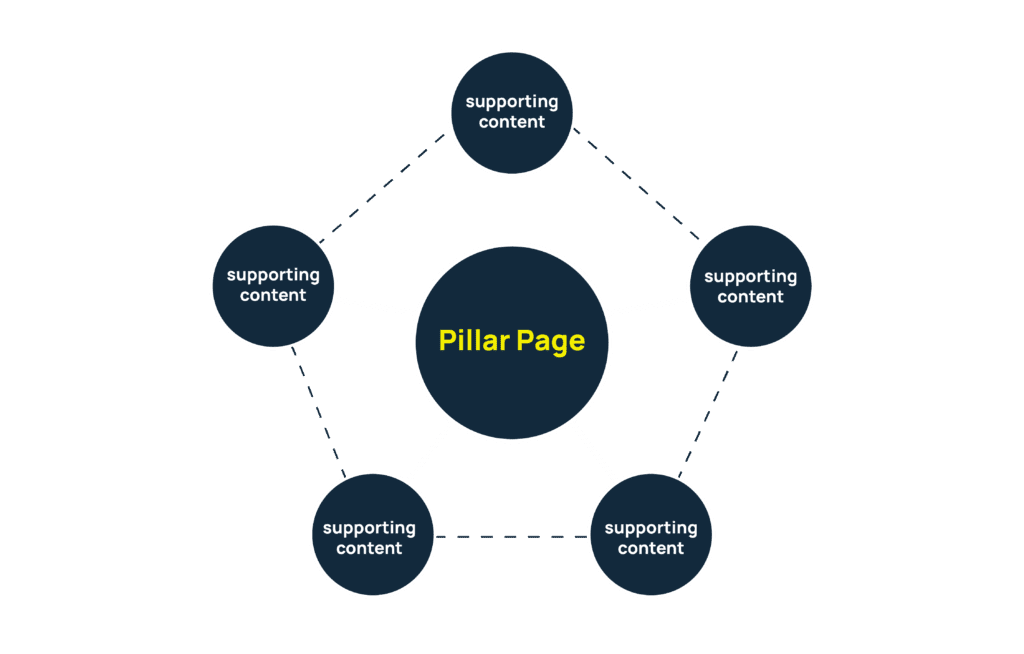
This structure helps you use backlinks more effectively and makes it clear to both users and search engines that you know your space.
Singularity’s Approach: Look at your highest-converting pages – sales materials, onboarding content, product docs – and invest in improving and expanding them. Use SEO to support your broader marketing strategy, not to dictate what you create.
Key SEO Aspect #3: Authority, or, Without Credibility, You Don’t Compete
Once your site is technically sound and you’ve built out content, the next question is: why should Google trust you over everyone else targeting the same terms?
Even if you nail your keyword strategy, remember you’re not alone, thousands of SaaS companies are targeting those same terms. In these hyper-competitive spaces, great content is just your entry ticket.
Search engines assess your site’s overall credibility. To increase your credibility in the eyes of search engines and your audience:
- build comprehensive topic clusters
- use internal linking to demonstrate subject mastery
- generate backlinks for your site on 3rd party websites
While backlinks remain crucial currency in SEO, their quality and relevance far outweigh raw numbers. A single link from an industry leader carries more weight than dozens from irrelevant sources. To build these kinds of links consistently, you need a smarter outreach process—one that focuses on relevance over volume, like this approach to finding the right SaaS blogs faster.
Remember that authority compounds gradually through consistent effort. Without it, even your most brilliant content will remain buried in search results.
Singularity’s Approach: Create content clusters around your core topics, strengthen them with internal links, and actively earn backlinks from relevant industry sites.
Key SEO Aspect #4: Targeting Keywords, or, Traffic Alone Means Nothing
Authority gets you visibility. Visibility gets you traffic. But traffic alone doesn’t mean results.
If you’re publishing consistently in keyword-friendly content clusters, you’re getting traffic. Your next problem? It’s not converting.
That means you have an audience problem. SEO only delivers results when the people discovering your content are potential customers. That’s precisely why effective SaaS SEO begins with defining your ideal customer profile (ICP) or target audience.
Without this clarity, you might capture attention but miss the underlying intent. For example, a startup founder searching “helpdesk software” is usually looking for a tool they can set up quickly, while an enterprise CTO searching the same term is focused on reliability, scale, and handling high ticket volumes.
While they may use the same high-level keyword, what they want to know is very different. When you recognize and account for these distinctions, you can meet your target audience’s expectations, hone in on longtail keywords and create stronger messaging.
This is also the reason why you can’t just target the highest-volume keywords in your space and expect results. In fact, some of the most valuable keywords won’t show high volume at all. Long-tail keywords targeting specific use cases often bring in highly qualified prospects who are much closer to converting. Even “zero volume” keywords are worth paying attention to, they can reflect emerging needs that keyword tools haven’t caught up to yet, making them a strong starting point for building targeted content early.
This represents the essential shift in mindset: moving beyond raw traffic to focus on customer-centric content that actually engages and converts your target audience.
Singularity’s Approach: Start with your ICP and build a keyword strategy around real buying intent. Prioritize long-tail and use-case-driven queries, even if they show low or zero volume. Then create content that directly answers those needs.
Key SEO Aspect #5: Marketing Funnels, or, If You Don’t Map the Journey, You Lose the Buyer
Once you’re attracting the right audience, the goal is keeping them on the path to conversion.
This may not happen right away, because your potential customers don’t make decisions instantly. Instead, they move through awareness, consideration, and decision stages at their own pace.
Without strategic content supporting each step, they may simply disappear.An effective SEO content strategy requires content that guides the entire buyer’s journey:
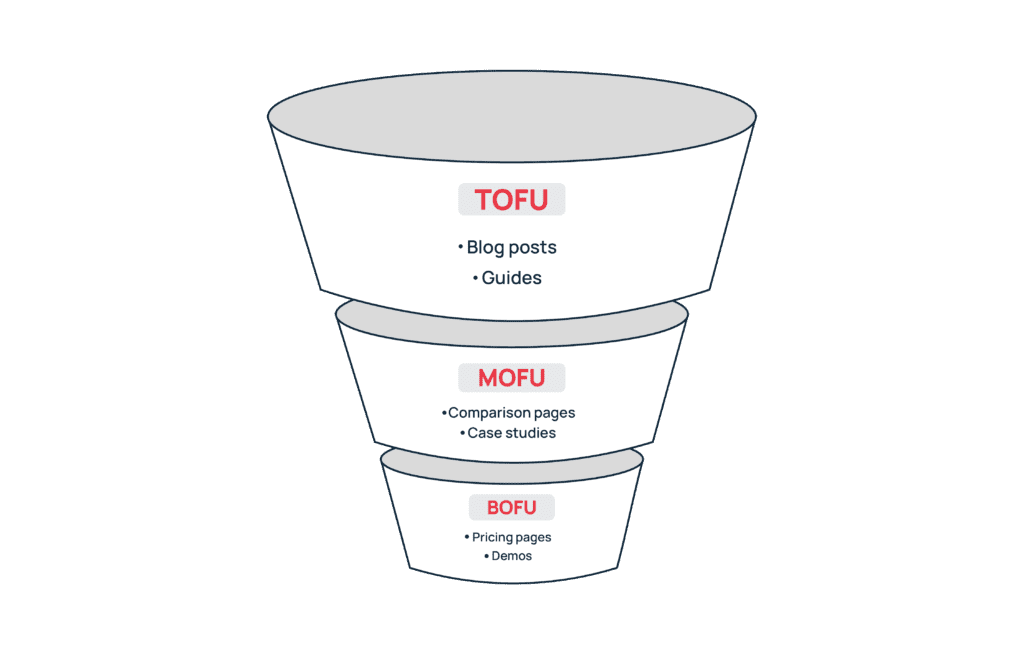
- Educational content builds awareness at the top of the funnel (TOFU)
- Solution-focused content builds trust in the middle (MOFU)
- Conversion-focused pages drive action at the bottom (BOFU)
Here’s where most teams go wrong: they pour resources into top of the funnel content because it’s easier to scale, measure, and showcase in reports. But as we already saw, traffic alone doesn’t generate revenue. Without mid and bottom-funnel content, all that traffic has nowhere meaningful to go, if you are even getting attention from potential buyers in the first place.
By mapping content strategically across the entire funnel, you transform SEO from a mere traffic generator into a complete conversion system.
Singularity’s Approach Build content for every stage of the funnel. Start by identifying gaps beyond top-of-funnel topics, then create content that supports evaluation and decision-making. Make sure every piece connects to the next step so users can move naturally from discovery to conversion.
Key SEO Aspect #6: Analytics, or, If You Can’t Understand Results, You Can’t Scale Them
As your new SEO approach kicks in, you will be very eager to look at your analytics and understand what’s working and what’s not.
To do that, focus not on raw traffic or vanity metrics, but on the things that truly impact your business metrics: conversions that generate leads, pipeline that feeds sales, and customer acquisition costs that determine profitability.
Despite all the tools, modeling, and sometimes snake oil at our disposal, attribution and analytics remain a difficult part of any marketer’s job.
Tools like Google Analytics and Search Console help you measure how users discover your content, what they do once they arrive, and where your funnel breaks down. As you track this data consistently, you start to see what drives results—so you can double down on what works and fix what doesn’t.
Singularity’s Approach Track metrics that tie directly to revenue. Set up clear conversion points, review performance regularly, and use the data to guide decisions. Focus on what actually drives pipeline and refine your strategy based on real results, not assumptions.
Conclusion: SaaS SEO as a System, Not a Checklist
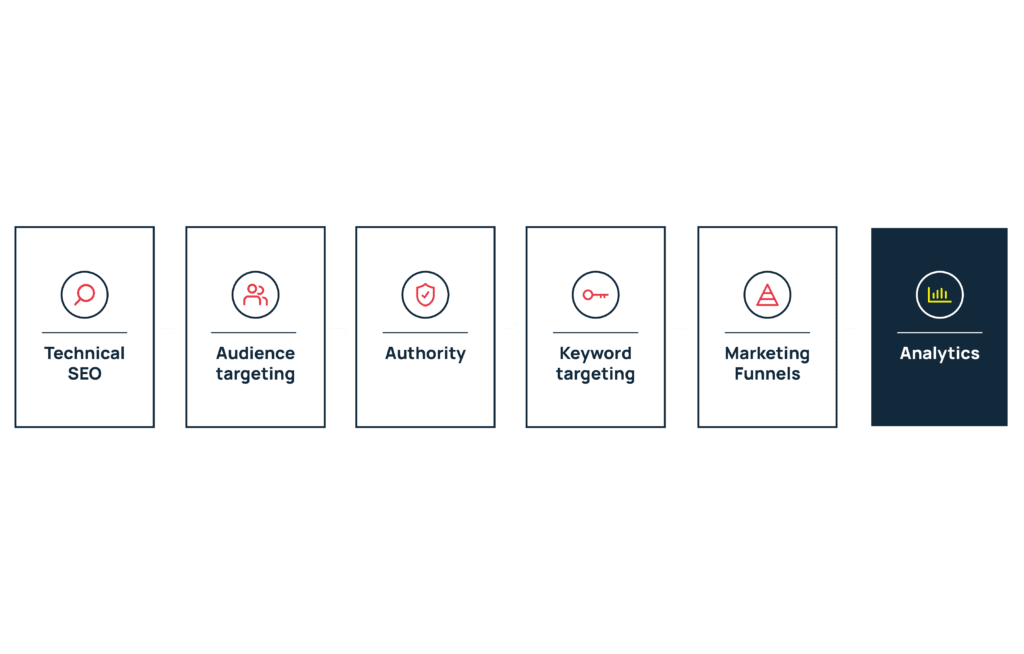
If you’re investing in SEO without seeing returns, the problem probably isn’t your effort, but your lack of structure. The best approach for success will start with nailing these key aspects of SEO we’ve laid out here:
- Technical SEO
- Audience targeting
- Authority
- Keyword targeting
- Marketing Funnels
- Analytics
If you are just trying to check off boxes –– publish 8x/mo, target top 10 keywords for our sector, report traffic every month –– you will never get the results your business needs.
If you want a clear roadmap tailored to your product, ICP, and growth goals, book a strategy call and we’ll walk you through exactly what to focus on next.