
TL;DR
- Most outreach fails because of poor targeting, not lack of effort
- Build a large initial list using search operators, competitor backlinks, and content discovery tools
- Qualify blogs based on relevance, audience alignment, authority, traffic, and editorial quality
- Prioritize opportunities into Tier 1, 2, and 3 to focus effort where it drives the most impact
- Treat outreach as a system, not a one-off tactic, to consistently generate meaningful results
You export hundreds of domains from competitor backlinks, pull lists from Ahrefs, scrape a few “write for us” pages, and start sending outreach emails at scale. On paper, it feels productive. In reality, the reply rates are low, and the placements you do land rarely move the needle.
This is where most outreach efforts break down: little to no targeting.
If you’re reaching out to the wrong blogs, no amount of personalization or follow-ups will fix the outcome.
In this article, you’ll learn a repeatable framework to find industry blogs and resources that are worth your time, filter out low-value sites early, and prioritize opportunities based on real impact. By the end, you will be able to build a focused outreach list that supports growth instead of a bloated spreadsheet that leads nowhere.
Step 1: Identify Industry Blogs Through Structured Discovery
Before you think about qualifying blogs, you need to build a list of potential outreach targets. .
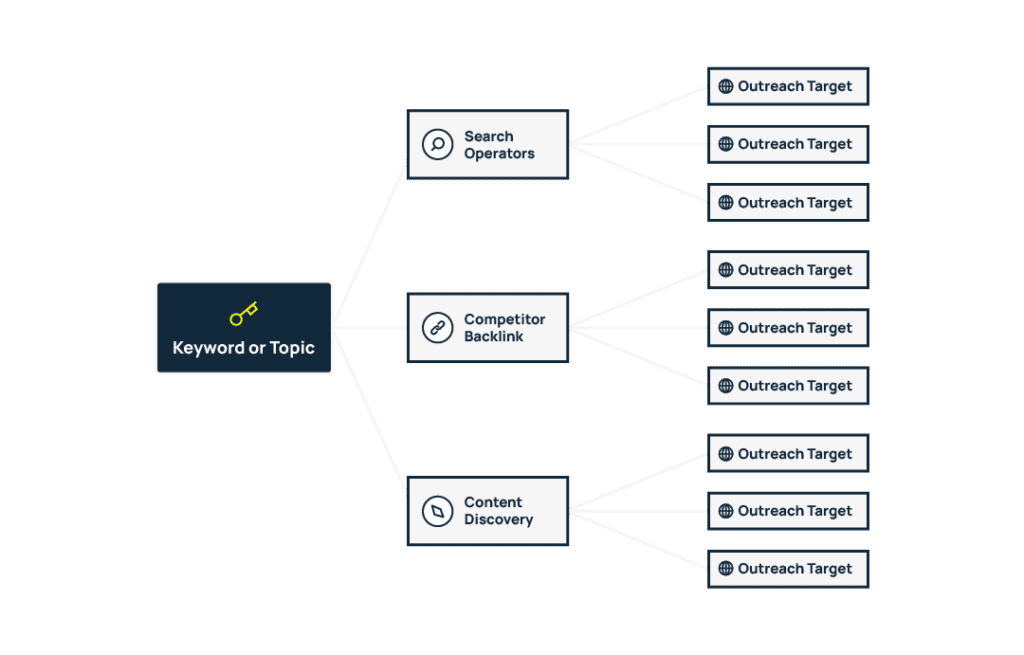
Use Google Search Operators with Intent
Search operators are modifiers you add to queries to force Google to return specific phrases or page types. You can use them to surface sites that have already signaled they accept contributions or curate external resources.
Let’s say you are a DevOps SaaS company targeting keywords like “DevOps automation.” (And remember: you can target more than one keyword.) You’d run targeted searches like the ones below, review the results, and add relevant sites to a spreadsheet as you build your outreach list.
Here’s some examples of searches you could perform.
For guest posting opportunities
- “DevOps automation” + “write for us” or “DevOps automation” + “submit an article” or “DevOps automation” + “contribute” → sites actively accepting contributions
- “DevOps automation” + “guest post guidelines” → more established blogs with defined editorial standards
The key is specificity. Aim to pick a keyword that will highlight your specific niche, such as “DevOps” + “write for us” to find platforms that speak to your particular audience.
For resource page link building
- “DevOps automation” + “useful resources” or “DevOps automation” + “recommended tools”→ curated lists of tools, guides, and references
- intitle:resources + “DevOps automation” → pages explicitly structured as resource hubs
For B2B SaaS companies, pitching assets like data studies, calculators, frameworks, or technical guides for inclusion is a good strategy because you add value to existing resources. Search for terms that match both your niche and the format of your asset so you surface resource pages built for your exact audience.
Competitor Backlink Mining (Without Blind Copying)
Competitor backlink mining means looking at the sites linking to your competitors to find opportunities for your own.
To do this in a productive way, export backlink profiles from tools like Ahrefs or SEMrush to surface domains already linking to competitors in your B2B SaaS category. Then filter your list to weed out obvious duds:
Filter by “dofollow” links. Dofollow links pass SEO value (helping your rankings), while nofollow links generally don’t. When building an outreach list, focus on sites that provide dofollow links so your efforts have a direct impact on organic visibility.
Remove obvious directories and generic listings. Exports often include SaaS directories, startup listing sites, coupon platforms, and scraper blogs. These rarely provide meaningful SEO or audience value and can be removed now so you’re not wasting time reviewing low-impact domains later.
Content Discovery
Use tools designed to analyze what content performs well online (for example, BuzzSumo) to look at audience-level signals like shares, backlinks, and engagement. This helps you identify which blogs and publishers actually reach and resonate with your target audience, so you’re prioritizing sites that can drive real visibility, not just links.
Focus on identifying blogs that publish consistently within your core SaaS category by searching for keywords like “DevOps automation.” If a site shows up repeatedly for that topic, it’s a strong signal they focus on your space and are more likely to align with your product and ICP.
Step 2: Qualification — Separating Signal from Noise
Now that you have your initial list, the next step is to filter it, so you can focus on high-value outreach instead of taking a spray and pray approach.
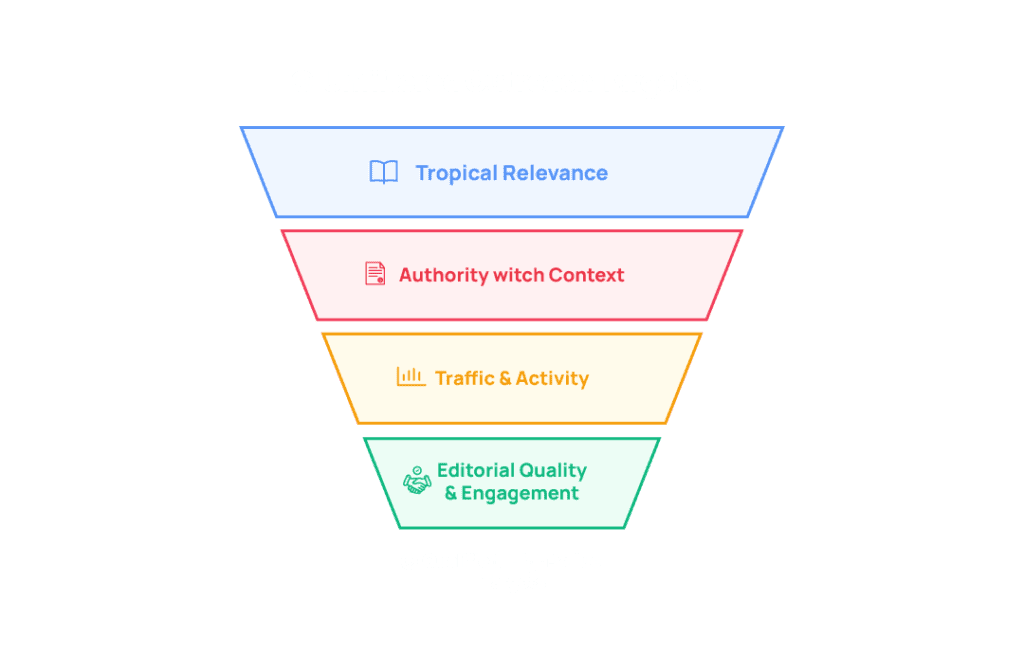
Determine A Site’s Topical Relevance
Start by manually evaluating whether a blog consistently publishes within your vertical. Look for a clear concentration of content in your SaaS category.
Next, look at how the site structures its content. Categories that align with your product’s problem space increase the likelihood that your contribution will fit naturally and sit within a relevant context, rather than feeling forced.
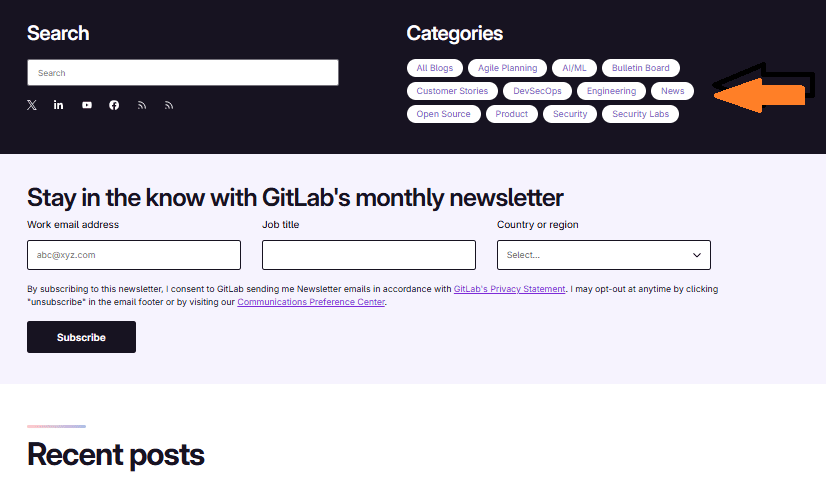
Then assess audience alignment. Go beyond keywords and consider who the content is written for. Is it high-level thought leadership aimed at founders and execs? Practical advice aimed at developers actually coding projects? If the audience doesn’t match your ICP, the placement may generate visibility but not meaningful impact.
Finally, check whether the site links to multiple competitors. Domains that appear across several competitor backlink profiles often indicate active coverage of your space and openness to similar content.
Evaluate Site Authority With Context
One way to evaluate a site’s quality is to look at Domain Authority (a Moz metric that estimates how likely a site is to rank in search based on its backlink profile). This can help you quickly gauge how established a site is, but it doesn’t account for relevance, audience quality, or editorial standards. A high-authority general site can still be less valuable than a more niche publication aligned with your SaaS category.
Then look for sites that have a high Trust Flow and Citation Flow together. Citation Flow reflects the volume of links pointing to a site, while Trust Flow reflects their quality. When Citation Flow is high but Trust Flow is low, it can indicate inflated or low-quality backlinks.
Finally, focus on balance and consistency. Strong sites show alignment between these metrics and steady growth over time. Prioritize credible, long-term domains—not sites chasing quick wins by trying to game the algorithm.
Validate Domain Traffic and Activity
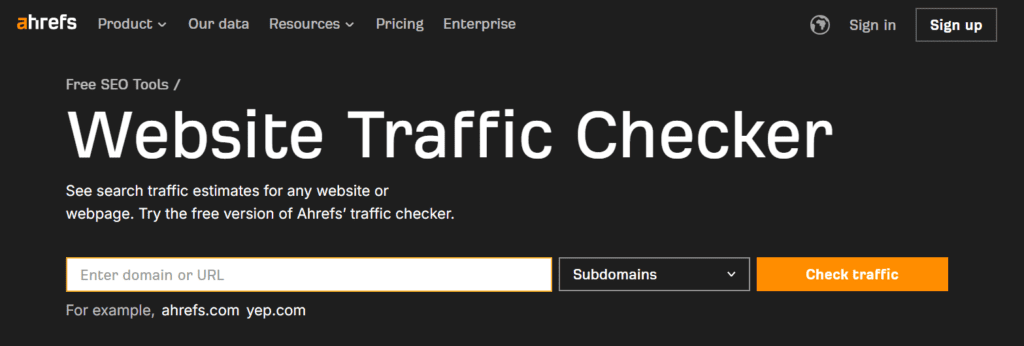
Unless you own a site and have access to its analytics, you won’t know exactly how much traffic it gets. But traffic estimation tools (like those from Ahrefs or SEMrush) can help you gauge whether a blog is actively attracting visitors or just relying on past authority.
Then check if traffic is stable or growing. If it’s dropping sharply, that’s usually a red flag.
Review Editorial Standards
For B2B SaaS, editorial standards matter beyond SEO. Low editorial standards reduce link value and weaken brand perception.Your placements should reinforce your long-term credibility, not make you seem low-quality or spammy.
So next review outbound linking behavior. A site frequently linking to unrelated or low-quality sites can indicate weak editorial standards or aggressive monetization, which reduces the value of being associated with the site.
Finally, evaluate content quality directly. Read a full article to understand whether the content is thoughtful, structured, and insight-driven, or simply AI slop designed to host links. Strong industry blogs demonstrate depth, clear intent, and subject-matter understanding.
Step 3: Prioritization — Turning a List into a Strategy
Once you’ve completed discovery and qualification, the next step is to segment opportunities strategically. Not all industry blogs should receive the same level of effort or urgency.
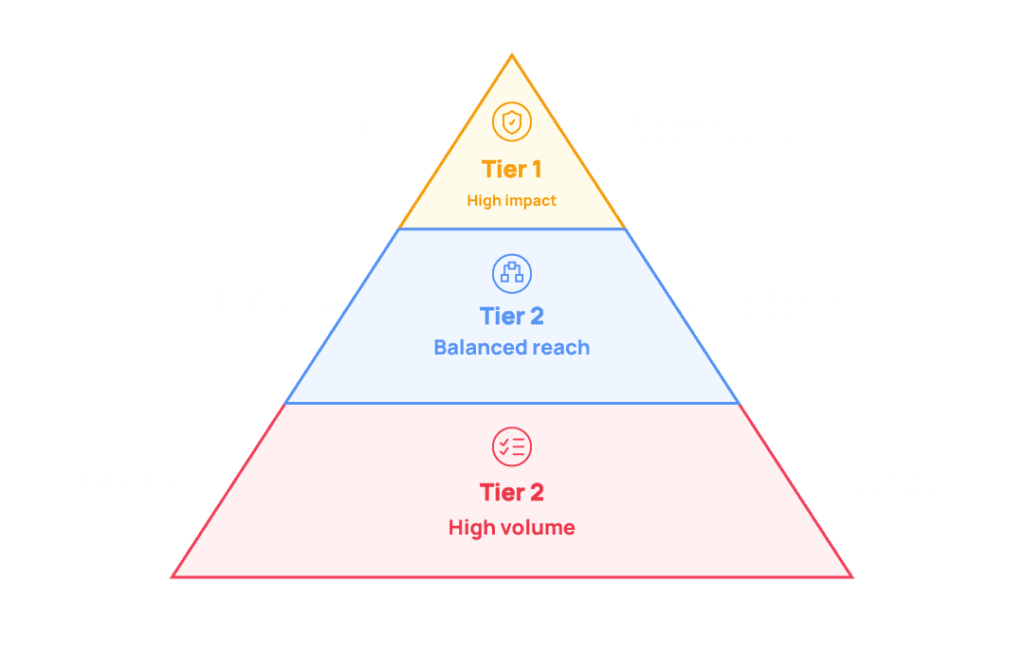
Tier 1: High-Authority, High-Relevance Industry Publications
These are the most valuable and competitive opportunities on your list, which can provide disproportionate impact on your traffic. They typically show:
- strong authority signals
- consistent organic traffic
- established editorial credibility
- high audience overlap with your ICP
This is also the smallest category, and the hardest to win. Editorial standards are higher, and successful placements often require original insights, proprietary data, or well-developed thought leadership.
Be thoughtful about your outreach, and give these sites serious attention as a single placement can influence rankings, referral visibility, and brand credibility within your SaaS category.
Tier 2: Mid-Tier Blogs Relevant to Your Niche
These sites may not have elite-level authority, but they show:
- steady traffic, credible link profiles, and a clear editorial focus within a specific niche.
Their content is tightly aligned with a particular vertical or subcategory relevant to your solution, which increases the likelihood that your contribution fits naturally and reaches the right audience. Compared to Tier 1 publications, they are also more accessible editorially, often open to expert contributions, collaborations, or resource inclusions.
For most B2B SaaS teams, Tier 2 blogs provide the best balance between effort and impact, combining strong relevance with realistic win rates.
Tier 3: Accessible but Lower Authority Sites
These are early-stage or emerging publications that show:
- haven’t yet built strong authority signals but operate within a defined niche.
Traffic and visibility are typically lower, but the audience can still be highly relevant.
These opportunities are also the most accessible, making them useful for building momentum, testing messaging, and establishing relationships within your industry.
But they aren’t all “low value”: a smaller, focused blog in your space is more valuable than a high-authority site with no real alignment. And they diversify your backlink profile and can help you create early traction.
Why Prioritization Drives Efficiency
Your outreach calendar should not treat all prospects equally –– it needs to account for potential business impact and the limited time you have to build placements. We recommend a pragmatic approach:
Tier 1 targets need deeper research and highly personalized pitches. They should take up 20-30% of your outreach time.
Tier 2 targets are the majority of your list and can be approached with a warm, personalized and repeatable pitch. They should take 50-60% of your outreach time.
Tier 3 targets fill gaps and help you maintain momentum, and can often feel more like peer-to-peer connections. They should take 10-20% of your outreach time. This balance ensures you’re consistently building pipeline through attainable opportunities, while still investing in higher-impact placements that take longer to win.
Conclusion: The Repeatable Framework for Identifying Industry Blogs
In B2B SaaS, links don’t create impact on their own. They influence rankings, rankings influence pipeline, but only when the audience behind those links actually overlaps with your ICP. That’s the difference between activity and results.
When you shift from collecting lists to building a system, your outreach becomes more predictable. You spend less time chasing low-value placements and more time investing in opportunities that can influence visibility, credibility, and pipeline over time.
Here’s our repeatable framework for building an outreach engine:
Discovery: build your initial list using search operators, competitor backlink analysis, and content discovery tools to surface relevant blogs and resources.
Qualification: filter that list based on topical alignment, authority (with context), traffic signals, and editorial quality to remove low-value sites early.
Prioritization: segment the remaining opportunities into Tier 1, Tier 2, and Tier 3, and allocate effort based on impact versus accessibility.
If you want a second set of eyes on how your current approach stacks up, Singularity Digital works with SaaS teams on SEO and content strategies that drive real pipeline. Reach out to us today to schedule a free call..